Monday, February 1, 2021

TBR: A Year of Mr. Lucky by Meg Weber

TBR [to be read] is a semi-regular, invitation-only interview series with authors of newly released/forthcoming, interesting books who will tell us about their new work as well as offer tips on writing, stories about the publishing biz, and from time to time, a recipe!


Give us your elevator pitch: what’s your book about in 2-3 sentences?


A Year of Mr. Lucky is a memoir of submission, loss, and longing. When Meg Weber - a recently divorced, queer, single parent - realizes she's ready to date again, she comes across the profile of Mr. Lucky, a smart dominant with similar interests. But not all goes as planned.


What boundaries did you break in the writing of this memoir? Where does that sort of courage come from?


This book pushes the limits of the epistolary form to include the modern modalities of email, texting, and dating app messages as well as the transgressive content of a kinky relationship. My memoir also breaches the boundaries between two aspects of my life I’ve distinctly kept separate: my involvement in consensual BDSM and my relationship with my family. Living the events of this book - the relationship with Mr. Lucky, the death of my sister, meeting Molly – returned me to my writer self which gave me the courage to tell this story.


Tell us a bit about the highs and lows of your book’s road to publication.


It took me roughly six years to write this book. Most of it was written 2500 words per week for deadlines in online writing classes with Ariel Gore. It was rejected by 41 agents and presses before it was picked up by Sincyr Publishing, a small press which had already published some standalone pieces of mine. Other adventures in publishing this book included: hiring an editor for the first full draft of the book, which led to a challenging and tumultuous three year romantic partnership with said editor; obtaining explicit permission from Mr. Lucky to use his emails as he wrote them, as well as his general blessing to publish this story the way I wrote it; deciding to use my own name and not my pseudonym; coming out to my siblings about my involvement in kink; and discussing the book with one of my therapy clients before this client ran into the book due to our overlapping communities and connections.


What’s your favorite piece of writing advice?


“Words matter. Write to learn what you know.” -Writing advice from my friend and mentor Mary Anne Em Radmacher


My favorite writing advice is “write until something surprises you.” What surprised you in the writing of this book?


The ending of the book surprised me. I didn’t know precisely where I’d end it until I heard myself say the words that set me free. I knew in that instant that this would close the story.


How did you find the title of your book?


The title is a bit of an inside joke with myself, which is weird but true. I often say that I can’t count, and there’s a bit in the book where we’re playing a word game and I struggle to add up my score. The events of this book take place from roughly March of 2013 to August of 2014, which is definitely more than a year. Calling it A Year of Mr. Lucky reflects my sentiment that I can’t count. Also, folks often mistake the title as A Year With Mr. Lucky. It’s always been of in my mind. One could argue that other than the six times we played, and the three other times we shared space in person, I was never really with Mr. Lucky.


****


READ MORE ABOUT THIS BOOK: https://www.megweberwriter.com/a-year-of-mr-lucky


ORDER THIS BOOK FOR YOUR OWN TBR STACK:

https://bookshop.org/books/a-year-of-mr-lucky/9781948780292?aid=19085&listref=books-by-me-34eb60c2-02c5-4ab8-9bba-f99cdbad32c0


READ AN EXCERPT, “Wardrobe”:

https://rabblelit.com/2018/01/01/wardrobe-meg-weber/


Monday, January 25, 2021

TBR: Bride of the Sea by Eman Quotah

TBR [to be read] is a semi-regular, invitation-only interview series with authors of newly released/forthcoming, interesting books who will tell us about their new work as well as offer tips on writing, stories about the publishing biz, and from time to time, a recipe!


Give us your elevator pitch: what’s your book about in 2-3 sentences?

A young Saudi couple moves to Cleveland to study in the early 1970s. When they divorce, the wife fears her daughter will be taken from her because of Saudi custody law. She disappears with the little girl, and the husband is left to search for his lost daughter.


Which character did you most enjoy creating? Why? And, which character gave you the most trouble, and why?

I loved writing Haleemah, who is the mother of Muneer, the young husband. Haleemah is loosely based on my grandmother and women of her generation. My grandma was illiterate, a child bride, had 12 children. As the matriarch of our large family, she was loving and sweet but also sometimes petty and willing to pit one of her children against the other. In an early draft, I wrote a whole section from her point of view, and although later that section ended up being told in Muneer’s point of view, I was really able to get to know her.

Saeedah, the young wife who abducts her own daughter, was the hardest for me. Unpacking Saeedah’s motivations was such a challenge and a process. She’s one of the reasons this novel needed time to germinate. I wanted people to see the deep trauma her actions caused for Muneer, their daughter Hanadi, and others, while at the same time not painting her simply as a villain. That was hard!


Tell us a bit about the highs and lows of your book’s road to publication.

I started Bride years ago when I first learned of a family friend’s reunion with his daughter, long after she’d been abducted by her mother. I workshopped some of the early pages but I never got real momentum, and then I set the book aside to work on another novel. When I finished that manuscript, I scrapped everything I’d written on THIS one and started over. That’s when I slowly started to figure out how to interweave the three perspectives of Hanadi, Muneer and Saeedah.

While my agent, Steven Chudney, and I were submitting the manuscript to editors, I ended up reworking it because of feedback we got. So, there’d be a low of “I need to rethink X and Y” and a high of “Eureka! I think I’ve got it.”

Tin House acquired the book last March, the same week my kids’ schools shut down because of COVID-19. It was a thrill to find Bride a home at such a well-respected indy house with an editor, Masie Cochran, who really loved it. Of course, back then I thought that by early 2021 we’d be back in person, but it’s still enormously exciting to have my first book coming out, no matter the challenges.


What’s your favorite piece of writing advice?

My favorite piece of writing advice is not about novels at all, it’s about opinion writing. Former USA Today opinion editor John Siniff told me, “If no one would argue against it, it’s not an opinion.” Here’s how I translate his advice for fiction and essay writing: Don’t be safe, and find the things that only you can say.


My favorite writing advice is “write until something surprises you.” What surprised you in the writing of this book?

The ending surprised me. I had long envisioned a particular way of ending the book, and then my editor suggested that I cut the last 20 to 25 pages. Now I think the place where the reader leaves the narrative is perfect.


How did you find the title of your book?

The book’s title is the nickname for Jidda, Saudi Arabia, where I grew up. I can’t remember exactly when I decided on the title, but it’s so poetic and speaks to so many of my novel’s themes. For me, the title also evokes the regional identity of the Hijaz, the part of western Saudi Arabia where Jidda is located.


Inquiring foodies and hungry book clubs want to know: Any food/s associated with your book? (Any recipes I might share?)

Food definitely helps me tell the story and reveal the themes of Bride. As newlyweds, Muneer and Saeedah try to make their mothers’ rice and lamb recipes, and how they go about it tells us something about their marriage. Then, when mother and daughter are on the run in Ohio, Hanadi watches Saeedah make the Saudi version of shakshuka, but to Hanadi it’s just tomatoes and eggs. She doesn’t know the cultural significance of it. And when Hanadi finally meets her paternal grandmother in Jidda, the first thing Haleemah does is feed Hanadi, as though it’s Haleemah’s way of speaking her love across languages and making up for lost time.


Saudi-style Shakshuka

Chop ½ onion (or a whole one) and sauté in olive oil until soft. Meanwhile, peel a tomato (or two) and squeeze out the seeds and juice. Chop the tomato and toss in the pan. Sauté until the tomato thickens a little. Add two to three beaten eggs. Season with cumin, salt, and pepper. Swirl with a chopstick or spatula as the eggs cook. Eat with pita, white cheese, and zaatar. 


***


READ MORE ABOUT THIS AUTHOR: http://emanquotah.com


ORDER THIS BOOK FOR YOUR TBR STACK: https://www.politics-prose.com/book/9781951142452


READ AN EXCERPT, “You Drive Me Crazy”: https://themarkaz.org/magazine/you-drive-me-crazy-from-bride-of-the-sea


Monday, January 18, 2021

TBR: Call a Body Home by Michael Alessi

TBR [to be read] is a semi-regular, invitation-only interview series with authors of newly released/forthcoming, interesting books who will tell us about their new work as well as offer tips on writing, stories about the publishing biz, and from time to time, a recipe!


Give us your elevator pitch: what’s your book about in 2-3 sentences?


The stories of Call a Body Home explore the borderlessness between nature, violence and memory against the Appalachian backdrop of Virginias Shenandoah Valley. Its characters are working class parents, children and siblings struggling to maintain the familial ties and traditions that bind them together, even as time and trauma threaten to uproot them. By turns savage and soulful, Call a Body Home offers a portrait of the modern South and how we fight through hardship and grief to find a way home. 


Which story did you most enjoy writing? Why? And, which story gave you the most trouble, and why?


The opening story of the collection, “Shrimp of the Dirt,” was the most pleasurable to write. I’m a sucker for stories centered around animals and natural phenomena, and this particular story, which revolves around two cicada emergences, gave me an excuse to do research on the ecology of the Shenandoah Valley where I grew up. It’s one of my favorite pastimes. The story also contains a few moments that are deeply personal to me, including the game described in the second section, which is based on a real game my mother played with me and my twin sister when we were children.


The story that took the most work was “Texaco Station.” Writing convincingly from a child’s perspective seems simple enough on the surface, especially if our first inclination is to present that point-of-view as limited, but the reality is of course more complex. Children are hardly limited in their ability to perceive deeper truths. It’s their ability to communicate these perceptions and turn them into agency that might be limited. On the latter point, I had to revise the ending several times before I was satisfied enough to leave it alone. Without spoiling anything, it rhymes with the ending of the story that comes before it, which I hope makes it feel as though the two moments are speaking to each other.


Tell us a bit about the highs and lows of your book’s road to publication.


The biggest challenges with a manuscript like this one were 1) recognizing that it should be a chapbook, and 2) finding a publisher willing to take a chance on a very short collection of stories. While the chapbook has a rich history in poetry, it’s certainly less common for prose writers to publish very short collections, though things are starting to change. Call a Body Home began as a full-length collection of stories, but as I revised the project, I began to obsessively cut out stories I wasn’t satisfied with and shorten those that remained. At first, I was dismayed: even though it felt like each new, shorter version of collection was tighter and more cohesive than the one before it, it also felt like I was getting farther and farther away from a length where the project would be publishable. 


That feeling changed once I attended a reading by Kathleen Rooney shortly after Lillian Boxfish Takes a Walk was released. She shared some advice that helped her as both a writer and publisher (at Rose Metal Press) who often works in shorter, experimental prose: approach the world of publishing not as a ladder you have to climb to place your manuscript with the largest possible venue, but rather as an ecosystem of lily pads, big and small, that you can hop between, depending on which venue is the best fit for your project. If you look at her career, she’s been prolific in publishing books across a wide range of genres and lengths this way, and recognizing her success gave me the confidence to stop conforming to the standards I imagined a larger publisher might want in a project, and instead follow my gut, cut the manuscript down to its simplest form, and hope to find the right lily pad. It took some time to do both, about 2 years, which was probably the low point in the journey.


There are maybe a half dozen independent presses that consider chapbook-length collections of stories, and I count myself as extremely lucky to have worked with Mason Jar Press. Michael Tager, Ian Anderson, and Heather Rounds are compassionate readers and supremely talented at what they do, and they quickly became champions of my work and my vision for the collection, which they picked as the winner of MJP’s 5th anniversary chapbook contest. Getting that news was certainly a high, even if the pandemic upended everything just a few months later. Throughout all the challenges this last year posed, Michael, Ian, and Heather went out of their way to make me feel deeply involved in each step of the publishing process. I’m beyond grateful to them for their help in bringing Call a Body Home into being.


What’s your favorite piece of writing advice?


This is going to sound bizarre, but its Dont forget to make your drug dealers do the dishes.” You could insert any personal or professional title into this phrase, but this is the version I received from my first mentor, Hanna Pylvainen, in the context of an undergraduate workshop discussion about a story where the characters behaved purely as facilitators of plot. Her point being: your characters are meant to behave like people, so take the time to get to know them through their everyday routines, however ordinary they might seem. The action doesn’t have to be remarkable for you to discover specific and surprising truths about your characters.


Another piece of advice from the same workshop: “Your competition is the laundry.” Readers have their own chores and routines that might threaten to interrupt their reading at any moment, so the onus is on you to keep them engaged. When it comes time to revise, it helps to ask yourself the question, “Is this scene/paragraph/sentence going to hold the attention of a reader who is also thinking about the laundry they have to fetch from the dryer?” 


My favorite writing advice is “write until something surprises you.” What surprised you in the writing of this book?


There were a few times where I got to that point, but one moment that stands out came at the end of “Goshen Pass” where I describe one character touching his wife’s scars, with his fingers “tracing their topographic map of a valley, searching for a sign of home across a distance too great to tell.” That line wasn’t anywhere on my radar when I was writing the scene, but it emerged more or less as written, and changed the way I saw the story. Once I had that line, the characters, and the larger questions of the collection about home, belonging and grief, all clicked into place. For that reason, I arranged the sequence of stories so that “Goshen Pass” sits at the heart of the book. 


 How did you find the title of your book?


I’ve always struggled when it comes to titles. Call a Body Home takes its name from the second story of the collection, which didn’t even have that title until just before I submitted the manuscript to Mason Jar. Originally, it was titled “Sow.” I was looking for a title that could give voice to the themes of the collection, one of which is the pull of home, which is especially strong in the Appalachian mountain communities I write about. There’s a moment where the character at the center of the title story, a girl who has been left behind with the rest of her family after her mother runs off, experiments with “testing gestures, such as slapping her brother when he tells her to chew with her mouth closed, hoping to find one that might summon their mother back from her new home.” That desire— to call her mother back home, to be made whole with a family and an ancestral place—rhymed with the imagery contained in the last line of the story, and once I saw how the former motivated not just her character, but a majority of the characters in the collection, I realized that it had to be the title. I like that it carries more than one meaning—it can refer to both the act of calling a person home, and finding that home within ourselves.


Inquiring foodies and hungry book clubs want to know: Any food/s associated with your book? (Any recipes I might share?)

 In the first story, “Shrimp of the Dirt” (linked below), I mention a few simple cicada dishes. Here’s a recipe courtesy of Richmond chef John Seymore: 


Blackened Cicadas with Grilled Onions and Peppers

4-6 servings


INGREDIENTS

30-40 cicadas (gathered as they emerge from the ground, remove heads, legs and wings)

1 red pepper, thinly sliced

1 green pepper, thinly sliced

1 Tbsp. olive oil

1 Tbsp. butter

Salt and pepper to taste

1 1/2 Tbsp. blackened seasoning:

1 1/2 Tbsp. paprika

1 Tbsp. garlic powder

1 Tbsp. onion powder

1 Tbsp. thyme

1 tsp. ground black pepper

1 tsp. cayenne pepper

1 tsp. oregano

1 tsp. salt

1 tsp. pepper


PREPARATION

In a small saucepan, bring 2 cups water to boil. Add cicadas and boil 4-5 minutes. Drain and set aside. Grill peppers and onions until al dente, season with salt and pepper. Set aside.


Heat saute pan until hot. Add olive oil, then cicadas. Saute 1-2 minutes. Add blackened seasoning, onions and peppers. Saute 1-2 minutes more. Finish with butter.


Serve over grits as a substitute for shrimp.


***


READ MORE ABOUT THIS PUBLISHER: http://masonjarpress.com


ORDER THIS BOOK FOR YOUR OWN TBR STACK: http://masonjarpress.com/chapbooks-1/call-a-body-home


READ A STORY, “Shrimp of the Dirt”: http://www.ninthletter.com/winter-20/winter-20-fiction/393-alessi


Thursday, December 10, 2020

Best Books (I Read) in 2020

I’ll say this about this crummiest of years: I read more books than usual, since reading is my favorite way to escape the world. Narrowing what I read down to 10ish books for my annual list of “best books I read this year no matter when they were published” is consequently VERY DIFFICULT. (Nothing about 2020 is easy! My first cull gave me 21 options!!) As always, I’ve refrained from including on my list books by writers I know/“know”, and I’ve moved those to a separate category. Order is chronological to how I happened to read these books, which basically means the order is random. And do I mean “best,” or do I mean “favorite,” or do I mean “book that was exactly right for the moment I read it”? Maybe I simply mean, “book I literally and truly recommended to others at least once over the year.”

Disappearing Earth by Julia Phillips: Linked stories (not a true novel, sorry publisher who claims it is) set in a remote peninsula of Siberia. Beautiful language, an austere setting…I was mesmerized.

You by Caroline Kepnes: Voice x 1000! Dark, funny, smart, New Yorker, bookish, creepy. I loved the TV show, but the book is even better.

Down and Out in Paris and London by George Orwell: I ended up reading a lot of books about dire situations this year, and this (non-fiction) depiction of the working poor in the 1930s was one of the most dire. A disturbing, compelling book.

How Much of These Hills Is Gold by C. Pam Zhang: Here’s another very dire and very harrowing book, about two Chinese-American girls struggling to survive in the 19th century American west. You’ll rethink the myths of the west and the immigrant tale. Well-structured, gorgeously written, unforgettable. But DIRE x 1000!

Master Georgie by Beryl Bainbridge: She’s an under-appreciated writer in the U.S., I think, as I’ve admired several other books she’s written. Wonderful historical fiction, inventively told, about a surgeon and his circle of affiliated people. The sections in the Crimean War are (wait for it) incredibly dire. Also, a truly shocking ending that was, nevertheless, inevitable. Interesting to read for structure if you’re struggling with that in your WIP.

Among the Thugs by Bill Buford: A horrifying (and dire) immersion into 1980s British “football” hooligan culture. Lots to think about with regard to group-think. A violent book, but a thoughtful one. We like to think we’d never fall sway to mob violence, but I’m not so sure.

Your Blues Ain’t Like Mine by Bebe Moore Campbell: It’s rare these days to find a novel that sweeps through decades as this one does, starting with a fictionalized Emmett Till character, and following the ripples and waves outward from that terrible murder. It’s also rare to see a novel tackle so many POVs, including that of the woman who incited this incident.

**The Pursuit of Love & Love in a Cold Climate by Nancy Mitford: Life is not entirely dire, and maybe there’s a reason this is my **favorite book of the year; after finishing, I immediately crammed it into my “favorite books bookshelf.” I absolutely loved everything about these two companion books in one volume; I didn’t read, I inhaled them! Funny, frothy, smart, provocative, zany…about a rich British family after WWI. Rabbit holes I traveled down after reading include researching Nancy Mitford and the Bright Young Things (be assured she’s not the Nazi Mitford sister); ordering a special marmalade mentioned; researching and baking a special walnut cake alluded to; watching the (delightful!) movie on Amazon Prime. Truly, for me, this was a magical reading experience, made more so by the fact that I’d randomly grabbed this book at least a year ago out of a Free Little Library, mistakenly thinking it was a memoir about the Mitfords. What a joyful discovery.

 Leave the World Behind by Rumaan Alum: So eerie and unsettling that I had to make sure I still had cell service several times. This book is about the (possible) end of the world, as seen through two very different couples who are ensconced in a luxury house beyond the reach of what we imagine must be mayhem and destruction, who have no way of knowing what’s going on. (Nitpick: no one has a radio??) A good book to read if you’re into interesting POV, as I thought the omniscient narrative worked well to create a disturbing sense of distance.

Interior Chinatown by Charles Yu: IMHO this book totally deserves the National Book Award that it recently won. It’s inventive, funny, dark, and on-point with regard to thinking about issues of race today. The book is told in the form of a screenplay, which I found easy to melt into, and on the surface is about a young Chinese-American male actor trying to get better roles in a police procedural called “Black & White.” So…clearly, it’s about much, much more than TV.

Rereads I’m Sneaking onto My List

 Sometimes one just needs to comfort-read a beloved volume from childhood. These two still stand up for me:

 From the Mixed Up Files of Mrs. Basil E. Frankweiler by E.L. Konigsburg: I was missing NYC, and this charming story about a brother and sister who run away from home and live in the Metropolitan Museum of Art is about as perfect as a novel gets. I’m incredibly jealous if you’ve never read it and get to encounter it for the first time!

The Catcher in the Rye by J.D. Salinger: I was missing NYC (a different time) and returned to one of the books that changed my teenage life, now viewing Holden’s struggles with the “phonies” as an extended meditation on unexpressed grief and loss. Maybe I’m smarter now, or, more likely, just older and possibly wiser. Brilliant book.

*** 

And now a shout-out to the books I read by my friends and social media friends that I love-love-loved!

Malawi’s Sisters by Melanie S. Hatter: After a young Black woman is murdered in a “stand your ground” incident, we follow the family left behind as they try to cope with this shattering loss. Great use of multiple POVs.

The Cactus League by Emily Nemens: Spring training baseball in Arizona captured with depth and nuance.

Jack Kerouac Is Dead to Me by Gae Polisner: YA…lost friendship, the lure of the boyfriend with the motorcycle, butterflies, and a surprising yet inevitable ending I so admired.

I Brake for Moose by Geeta Kothari: Short stories about a thousand different things, including feeling placed (or not) in the world. (My favorites were the title story and “Foreign Relations.”)

This Is One Way to Dance by Sejal Shah: Lyric essay collection; here’s a super-short sample, about the author’s “Indian” wedding, one of my favorite pieces: https://brevitymag.com/nonfiction/things-people-said/

 Until We Have Faces by Michael Nye: Short stories, and what I especially loved was seeing people at work, in a variety of jobs (including, not for the faint of heart, a man raising dogs for meat after chickens have been wiped out).

Coal Black Horse by Robert Olmstead: Set during the Civil War, this lyrical novel is spare, precise, and urgent. Oh, and dire.

Clutter: An Untidy History by Jennifer Howard: Part memoir, part exploration of why we have SO. MUCH. DAMN. STUFF.

wife | daughter | self: memoir in essays by Beth Kephart: I’m cheating, since this book will be officially released in the spring (pre-order now!!). Relentless exploration of self, with sentences that will stop your heart with their exactness.

The Fear of Everything by John McNally: Immersive short stories that made me feel I was getting a novel in 20 pages. My two favorites: “The Creeping End” and “The Blueprint of Your Brain.”

 The Rest of the World by Adam Schwartz: The author uses his two decades of experience as a schoolteacher in Baltimore to capture the tough yet fragile complexities of adolescence in these short stories. Dire, nuanced, hopeful.


Happy holidays, everyone, and happy 2021! I'm grateful you're part of my  literary/reading/social media/real life community!

Wednesday, December 2, 2020

TBR on Hiatus...

We'll be back in January with a fabulous line-up of new books and authors!  

Monday, November 16, 2020

TBR: Inherent by Lucía Orellana Damacela

TBR [to be read] is a semi-regular, invitation-only interview series with authors of newly released/forthcoming, interesting books who will tell us about their new work as well as offer tips on writing, stories about the publishing biz, and from time to time, a recipe!


We don’t expect an elevator pitch from a poet, but can you tell us about your work in 2-3 sentences?

 Inherent is a collection that reimagines life in coastal Ecuador in light of present time transitions and challenges. These evocations, made with fragments of phrases, images, smells, transform the memory landscape of the speaker and address belonging and identity as they are recreated far away from home.   


Which poem did you most enjoy writing? Why? And, which poem gave you the most trouble, and why?

The poem I enjoyed writing the most was “The Paramo Train.”  This poem is based on an actual trip I took with my father by train, going from Durán, a town near Guayaquil, to Quito. That was the first time I went through la Nariz del Diablo, a passage in the Andes with beautiful scenery but very steep and zigzaggy, in which the train has to go in reverse to change tracks. My father described it to me before we took the train and I was terrified but excited about it.

 The poem that gave me the most trouble was the last one, “Ink-Carved Rusty Path” which was originally an ekphrastic poem, inspired by a combination of photographs presented as a prompt for a contest in the web site of a literary magazine. The poem won the contest, but I had to rework it several times, for years, before I thought it was ready to stand on its own. 


Tell us a bit about the highs and lows of your book’s road to publication.

I wrote most of these poems between 2015 and 2017. That was a high. Started submitting the manuscript in 2018. There were a few lows and a few highs along the way. Earlier versions of Inherent made it to the upper rounds in the selection process of a few presses; they also received a fair amount of outright rejections. One version was a finalist in a literary contest. I knew that Inherent would eventually have its chance, so I continued reviewing and submitting it. Finally, in late 2019, it found a wonderful home in Fly on the Wall Press. That was a mighty high.


What’s your favorite piece of writing advice?

I don’t remember who said this, or where I read it, but I think it’s the most truthful thing about this endeavor: Just write. You can’t edit or improve a blank page.


My favorite writing advice is “write until something surprises you.” What surprised you in the writing of this book?

How these poems, which started as a series of very rough and unrelated notes, soon were speaking to each other and came together as a collection. 


How did you find the title of your book?

I don’t remember exactly how the title came to me; I think it just emerged organically from what the collection was about. I went back and forth between Inherent and Inheritant. At some point I decided that Inherent better accomplished what I was looking for:  a short title that captured the idea of both a symbolic and blood lineage among women.


Inquiring foodies and hungry book clubs want to know: Any food/s associated with your book? (Any recipes I might share?)

Foods and drinks are spread thorough the collection. Bread is made; sandwiches, crackers and chocolate are eaten. Cake is not (in real life, it is). Coffee and sun tea are served. Watermelons are sliced, mangoes are sucked, cherries are chocked on. I mention citric fruits –lemons, limes, oranges— a few times (hence the cover), and limoncello. Skewered meat, cheese.  Breast milk. Horchata, which my grandmother prepared often. She made the local version of horchata with rice, oatmeal, or barley. In her food blog in Spanish, my sister shares the recipe to make a popular oatmeal drink. http://comidasdeecuador.blogspot.com/2013/01/quaker.html


****


READ MORE ABOUT THIS AUTHOR: https://notesfromlucia.wordpress.com/


ORDER THIS BOOK FOR YOUR TBR STACK: https://www.flyonthewallpoetry.co.uk/product-page/inherent-by-luc%C3%ADa-orellana-damacela


READ A POEM FROM THIS BOOK:  https://www.flyonthewallpoetry.co.uk/product-page/inherent-by-luc%C3%ADa-orellana-damacela [click on book cover and move through arrows]


Monday, October 26, 2020

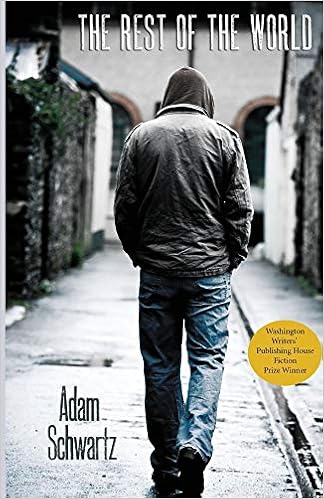
TBR: The Rest of the World by Adam Schwartz

TBR [to be read] is a semi-regular, invitation-only interview series with authors of newly released/forthcoming, interesting books who will tell us about their new work as well as offer tips on writing, stories about the publishing biz, and from time to time, a recipe.


Give us your elevator pitch: what’s your book about in 2-3 sentences?

 All of the stories in this collection are set in Baltimore, and they were all inspired by getting to know the teens in my classroom. As our country grapples with the ideals we claim to aspire to, this collection offers stories about resilient kids growing up in neighborhoods sabotaged by systemic inequities. These teen and young adult characters rescue loved ones, betray one another, seek redemption, plot hustles, reckon with moral ambiguities, and struggle to find meaning in a city that owes them better.


Which story did you most enjoy writing? Why? And, which story gave you the most trouble, and why?

 “Pavane for a Dead Princess” was probably the hardest story for me to pull together. It’s the longest in the book; it covers a lot of ground temporally; it’s a story within a story. But most of all the protagonist undergoes a reluctant transformation that wasn’t easy to render. It’s about a young man who falls in love with the daughter of the owners of the neighborhood carry-out. Her family is Korean, and her parents don’t want her involved with a dude from the neighborhood. One night, just as things seem to be lining up for the protagonist, he becomes entangled in an altercation that he might’ve avoided. (Readers can decide.) Setbacks ensue and over time—almost without realizing it—he finds himself on a redemptive quest that takes him down the unlikeliest of paths.

 The story I most enjoyed writing was the title story, “The Rest of the World.” In this story, the teen narrator is called upon to protect a child. By doing so, he takes on a moral task larger than himself, and achieves, perhaps, a kind of nobility. [See link below.]


Tell us a bit about the highs and lows of your book’s road to publication.

 The high point has been working with the wonderful people at Washington Writers’ Publishing House. Everyone there has been kind, helpful, professional, smart and experienced.

 Prior to winning the WWPH prize, I sent my book around to literary agents. A handful of agents read at least of some of the stories in the collection, offered praise, and then proceeded to ask for a novel. The publishing industry’s preference for novels over story collections is well-known. (For a reminder, stroll along the literary fiction aisles of Barnes and Noble; relatively few story collections adorn the shelves.) Still, it was disappointing to hear first-hand from some agents that they liked my work but didn’t think they could place my story collection with publishers.


What’s your favorite piece of writing advice?

 “If you keep working, inspiration comes.” Alexander Calder


My favorite writing advice is “write until something surprises you.” What surprised you in the writing of this book?

One thing that surprised me is that I discovered the scope of my concerns. I’m drawn to writing stories about teens and young adults coming of age. Our initial encounters with the hard realities of adult life transform us. How do we negotiate these experiences? Who do we become in their aftermath? And in what ways do we hold on to, or reach back for, the parts of ourselves that got left behind?

That may sound like a narrow range for a book of stories, but I don’t think of it that way—in part because our teen years are such a crucial, formative period. It’s during this window that we’re trying to sort out our values, trying to figure out the kind of people we want to be in the world and trying to forge identities that are in harmony with who we hope to become.  

I spent much of my own adolescence adrift. Decades later, I still wonder who I was back then and what I was looking for. If the reckless, dreamy, short-fused, high school drop-out I was at seventeen could meet the schoolteacher I am today, would they recognize each other? I don’t know. 

Anyway, this border between childhood and adulthood interests me. It can be a fraught and volatile period. Throw into this mix the kinds of challenges many vulnerable kids in Baltimore have to deal with and, sometimes, the stakes become unimaginably high. Teens in Baltimore don’t get much of a margin for error. There aren’t a lot safety nets to catch them if they make a poor decision, as kids sometimes do.

 And if Baltimore asks children to navigate a minefield of complex choices—as I believe it does—than I hope my stories are affirmations of belief in kids who refuse to give into despair.


How do you approach revision?

 My approach to revision is I keep doing it until I can live with what’s on the page. I’m frequently surprised by the progress that comes from holding an inchoate or unresolved idea in my mind—sometimes for days or weeks or months—and continuing to check in on it. Sometimes I feel like writing fiction is really about tapping into this instrument that allows you to hold certain unresolved ideas in perspective over time so that you can work them out.


Inquiring foodies and hungry book clubs want to know: Any food/s associated with your book?

Eight years ago, Hostess Brands, the company that makes Twinkies, briefly went under. After several months, a buy-out company stepped in and saved the iconic snack cake. Twinkies—and the fear that they were about to disappear—became the device that propels the events in the story “Wizzur.”


*****


READ MORE ABOUT  THIS AUTHOR:  https://adamschwartzwriter.org


ORDER THIS BOOK FOR YOUR TBR STACK: https://bookshop.org OR https://www.politics-prose.com


READ A STORY FROM THIS BOOK, “The Rest of the World”:  https://philadelphiastories.org/article/rest-world-0/#respond


Work-in-Progress

DC-area author Leslie Pietrzyk explores the creative process and all things literary.