Monday, October 7, 2024

TBR: In the Sky Lord by Mary Troy

TBR [to be read], a semi-regular, invitation-only interview series with authors of newly released/forthcoming, interesting books.


Give us your elevator pitch: what’s your book about in 2-3 sentences?


A restaurant worker steals from a donation jar meant to collect money for a dying boy; a young woman held up at gunpoint is asked to choose which of her coworkers should be shot; a woman in her fifties suffers near debilitating guilt over all the small things she should have done, the times she looked away; a woman who believes herself to be mean operates a kennel for  stray and dumped dogs against a city ordinance; a newlywed hides her dying husband from his mother; a woman takes her father to the Kalaupapa leper colony for what they both know is a non-existent award; a former Archangel from the Pearly Gates Men’s Cub tries turn her life around as she operates a marina in a poverty stricken area of Missouri. These stories and more are in IN THE SKY LORD. All ten stories are about inventiveness, resilience, survival, yearnings, strength, and hope, but mostly they are about the strong need to connect to another.


Which story did you most enjoy writing? Why? And which story gave you the most trouble, and why?


The title story, “In The Sky Lord,” gave me the most trouble because the character, Belinda, became more complex with each draft, never stopping to become someone I could grasp. Not for years. And though she is the second oldest woman in here, she changes in unanticipated ways, maybe changes more than others. Because “In The Sky Lord,” was the hardest, it was also the most enjoyable, that is if enjoyable means frustrating and haunting. Also “Rent-to-Kill,” the first story in the book, is about Millie Kick, formerly Millie Holmes who was the protagonist in “Do You Believe In the Chicken Hanger?” a story I wrote 20 something years ago that was one of the runners up for the Nelson Algren Award. It was fun to do a sequel.


Tell us a bit about the highs and lows of your book’s road to publication.


Oh, IN THE SKY LORD has a great story. In 2018 it was accepted as a collection, nine stories I had published over the previous 6 years as I was working on the novel, Swimming on Hwy N. The publisher, though, soon decided he would prefer to use the new work in a larger book of New and Selected, highlight it as part of the press’s 50th anniversary celebration.  I was excited, humbled but excited. But the press was connected to a university, and as COVID lingered, the press lost funding. The publisher told me not to worry, at first, as they were getting endowments and would continue to publish as an independent. But alas, that never quite worked. In the meantime, partly because I had just retired and partly because COVID kept me isolated, I decided to take each of the nine stories apart and make them even better. So I did, eventually dropping two of them but writing two new ones. I saw a chance—with lots of changes—to connect the stories, and I enjoyed that, too. So sometime in ’21 I sent the new collection to Braddock Avenue Books.  Why Braddock? I had just read Kerry Neville’s collection, and discovered not only her but also Braddock, a press I’d not heard of yet, but one that does great stuff. Nine months after I sent the manuscript, it was accepted, but set for publication two years away. I continued to refine the stories in those two years, and even at the very last minute added a very new one set in the town of Wolf Pass, Illinois, a town I created for the book.


What’s your favorite piece of writing advice?


True characters are flawed and frightened and weird and absurd and confused and much more, just like us. If they are squinted at just right, though, seen from different perspectives, their stories told “slant,” as Emily Dickinson advised, their uniqueness can come through. Not one of us, not one character, is what they seem.


My favorite writing advice is “write until something surprises you.” What surprised you in the writing of this book?


That the endings changed so from the way they were originally published, that they all now end in a sort of hope. I don’t normally consider myself a hopeful sort, but I believe in the inventiveness and inner strength of all these women.


How did you get the title?


“Will the Circle Be Unbroken” is a hymn from 1907 or so, yet more than a hundred years later still recorded by Bob Dylan, Johnny Cash, The Neville Brothers, the Staple Singers and many others. The lyrics tell us there is a better world a’waitin’,  “in the sky, Lord, in the sky.”  That line always made me laugh. A world in the sky! A better one! I said long ago, someday I will write a book titled IN THE SKY LORD. This was long before I wrote the short story with that title, and decades before the book was even an idea.


Inquiring foodies and hungry book clubs want to know: Any food/s associated with your book? (Any recipes I might share?)


Many of my previous books, most especially Beauties, about two women running a cafĂ©, are about food and recipes. In fact, my cousin makes my meatball recipe from Beauties every year over the holidays, and his children call it Mary’s meatballs. But this book is full of diner fried fish and chips, waffles and home fries, pulled pork and macaroni salad, delivered pizzas, fast foods, canned chili and cheap hot dogs, etc.. I had not realized that until you asked. Maybe because these are all foods I no longer eat but did like at times. Well, “Butter Cakes” is about a man who makes butter cakes for last meals in prisons, but he has not revealed the recipe except to say each contains a pound of butter.


*****

ORDER THIS BOOK FOR YOUR OWN TBR STACK: https://shop.braddockavenuebooks.com/pages/books/133/mary-troy/in-the-sky-lord

Monday, September 23, 2024

TBR: The Book of Losman by K.E. Semmel

TBR [to be read], a semi-regular, invitation-only interview series with authors of newly released/forthcoming, interesting books.


Give us your elevator pitch: what’s your book about in 2-3 sentences?


THE BOOK OF LOSMAN is about a literary translator in Copenhagen with Tourette Syndrome who becomes involved in a dubious and experimental drug study to retrieve his childhood memories in a tragicomic effort to find a cure for his condition.


Which character did you most enjoy creating? Why? And, which character gave you the most trouble, and why?


Daniel P. Losman—who goes simply by Losman—was very much a fun character to write. I’ve written 7 completed manuscripts over the past 30 years, five novels and two collections of stories (there were more manuscripts I simply abandoned). Nearly all of those manuscripts contain stories and characters that involve background research. This is especially so with one manuscript, a retelling of Beowulf set in the Southern Tier region of New York State. I spent 10 years writing that book, which is called IN THE COUNTRY OF MONSTROUS CREATURES. To do it properly, I had to read and reread Beowulf, I had to research the process of fracking (which plays an outsize role in the novel), and I had to invest a great deal of time learning more about this region of the state. I am from New York State—I love New York!—but I grew up in the Finger Lakes. There are great differences between these regions. Since I was after a certain degree of verisimilitude, research was necessary.


I pitched agents and eventually signed with one who loved the Beowulf retelling. He shopped it around and I got a lot of wonderful responses from major editors and publishers, though all of which were, ultimately, rejections. So I ended up giving up on the novel. Now it’s just a lonely Word doc on my laptop. I mention all this because, with The Book of Losman, I wanted to tell a simpler story, one that didn’t take a decade to finish or force me to spend countless hours doing research. I felt I knew Losman from the start. The two of us share some commonalities. He is a literary translator with Tourette, like me, and because of this his character traits slotted into place rather easily. Also, he lives in Denmark as I once did. Losman is not me, far from it. But because my life experiences are close to his, I didn’t have to do as much research. As a result, I was able to write the first draft in less than two years. 


The hardest character for me to write was Losman’s crush, Caroline Jensen. She’s an artist, and a bit of an odd duckling. I had to figure out a way to create her character without resorting to caricature. I didn’t want to write a story with a traditional romance, either, so there’s this awkward tension between them throughout the novel. Balancing that tension took some effort.


Tell us a bit about the highs and lows of your book’s road to publication.


One interesting tidbit: this book actually started as a memoir. But the writing felt forced, and I limped along, not certain how to go about putting together a memoir. Besides, I kept asking myself, who wants to read a sad story about a boy with Tourette? I sure didn’t. I wanted to write something that contained both sadness and humor but was still entertaining. I’d been chewing on one particular idea for years—What if there was a pill that could return our childhood memories to us?—and it dawned on me that this was the perfect story for that idea. So I pulled one small scene from the memoir, the “truest” scene, and reimagined the entire book as fiction. Once I did that, the flood gates opened and the writing gushed. Fiction has always been my preferred medium. (Though I will add that I published a personal essay in HuffPost that served as all I wanted to say, or would have said, in a memoir.)


My agent loved this manuscript too, and he gave me some feedback that I incorporated. The book went out on submission but, like with the Beowulf retelling, I ended up getting only rejections. They were nearly all uniformly praiseful of my writing, but such praise often feels hollow when it’s accompanied by the words “it’s not right for us” or “we hope it finds the right home.”


While the book was out on submission, I began writing a middle grade novel. Once it became clear that The Book of Losman was going to suffer the same fate as In the Country of Monstrous Creatures, I made the decision to drop my agent (it was an amicable split; he does not represent middle grade books). I assumed, wrongly, that I would be able land another agent. I still don’t have an agent—and it’s not for lack of trying!


But I never stopped believing in The Book of Losman, so I submitted the manuscript to SFWP’s Literary Awards Program two or three years ago. I’ve known the publisher, Andrew Gifford, for years. SFWP published my translation of Simon Fruelund’s collection of stories, Milk, in 2013, and I even published a number of interviews with translators at SFWP’s online literary journal for a few years (“Translator’s Cut,” I called my interview series). Since I playfully incorporate stories and characters (and themes) from Simon’s work in The Book of Losman—the opening chapter is very much a reimagining of Simon’s story “Kramer” from that collection—the manuscript found fertile soil at SFWP. The manuscript didn’t win the contest, in fact it only made the longlist, but Andrew liked the story and decided to take a chance on publishing it. Around the same time, another indie publisher offered me a contract to publish the book, but I knew SFWP was the right choice. This has absolutely proved true.


What’s your favorite piece of writing advice?


Don’t take rejection personally. Your work can be rejected for many reasons, but you’ve got to keep plugging away, chasing your vision, and getting better. Once you find your stories, good things will happen. It may take 30 years, as it did for me, but if you’re patient and willing to work through all the rejections, you’ll publish your work eventually.


My favorite writing advice is “write until something surprises you.” What surprised you in the writing of this book?


I don’t write with an outline. I put a character in a situation and see what happens, building the story as I go along. So in this sense, everything that happens is a surprise. It’s this kind of creativity that excites me enough to wake up at 5:00 a.m. to get back to work. It’s not until after the draft is complete that I go back and make sure things connect properly. Sometimes I have to rewrite or remove scenes, but generally speaking, in the first draft, I want to write as though I’m a reader engaging with this story for the first time. Which I am.


The biggest thing that surprised me in this particular novel is just how much Simon Fruelund’s work influenced the story. Perhaps it shouldn’t be such a surprise, since I’ve known him for more than fifteen years and I’ve translated three of his books. Simon’s ideas on literature and fiction have also proven hugely important to me. And he’s a friend. The Book of Losman is, in a sense, an homage to his work.


Still, even though I deliberately began The Book of Losman with a reimaging from one of his stories, I didn’t quite anticipate that Losman would share certain character affinities with Pelle, say, the main character from Simon’s novel The World and Varvara (published by Spuyten Duyvil in 2023) or that Losman would also be working on a book, like Pelle, with a publisher breathing down his neck. It was only after writing the manuscript that I realized how deep the connection ran. I don’t mind this at all. I love Simon’s books, and I think it’s wonderful that my novel is engaged in a dialogue with them.


How did you find the title of your book?


The Book of Losman has been the title for as long as I can remember, though I did hem and haw a bit once I realized there were already a lot of books that included “The Book of—” in the title. I debated just calling it Losman. But I couldn’t shake one important thematic significance that would justify me calling it simply Losman. There’s a kind of meta-quality to this novel, right from the opening sentence:


“When he moved to Copenhagen with his Danish girlfriend, Kat, fifteen years ago, Losman imagined his life like a Fodor’s guidebook, rich with possibility and adventure.”


Simply put: As a character, Losman is a kind of “book” to be read, translated, and understood. The narrative follows a circular pattern that only becomes clear at the end. So, to me, The Book of Losman always had to be the title. I’m happy with it.


Inquiring foodies and hungry book clubs want to know: Any food/s associated with your book? (Any recipes I might share?)


My favorite Danish pastry makes an appearance: Tebirkes! They are hunks of buttery deliciousness.


*****

READ MORE ABOUT THIS AUTHOR: https://kesemmel.com/


ORDER THIS BOOK FOR YOUR OWN TBR STACK: https://www.amazon.com/Book-Losman-K-Semmel/dp/1951631374/


Tuesday, September 17, 2024

TBR: Blood on the Brain by Esinam Bediako

TBR [to be read], a semi-regular, invitation-only interview series with authors of newly released/forthcoming, interesting books.


Give us your elevator pitch: what’s your book about in 2-3 sentences?


Akosua, a young Ghanaian American woman, struggles to confront the challenges in her life, including a head injury, a breakup, and the reappearance of her absentee father. She deals with her problems the best way she knows how—by rushing headlong into new ones—until the accumulation of unresolved trauma finally catches up to her.


Which character did you most enjoy creating? Why? And, which character gave you the most trouble, and why?


Akosua and I have demographics in common—Ghanaian heritage, Detroit origins, suburban upbringing, coming of age in New York City. But most of the decisions Akosua makes are the opposite of what I’d do, for better or worse. She’s outspoken and impulsive; I’m shy and make way too many lists. It was fun to create an alter ego.


Akosua's mother challenged me (just as she did Akosua). For a while, all I had was her laugh, "a spooked flock of birds, a flutter of wings escaping to the sky." I had a sense of who she was, but it was hard to translate that onto the page.


Tell us a bit about the highs and lows of your book’s road to publication.


The novel had been my MFA thesis, and after graduation, I got some encouraging responses from agents but didn't land one. Imposter syndrome plus anxiety about getting a "real" job and paying back my student loans led me away from writing. I gained a truly rewarding career as a teacher and educational writer, but I lost my confidence as a writer.


But then (~15 years post-MFA) the pandemic happened. Of course it was terrible and scary and felt like the end of the world; at the same time, during that period, I found my way back to writing. My husband convinced me to revise Blood on the Brain and submit it to Red Hen's Ann Petry Prize, and shockingly, I won the prize, which included publication.


What’s your favorite piece of writing advice?


To help me combat my anxiety about whether my writing was “good enough” for publication, my therapist said, “Remember the little girl inside you who just loves a good story? Write for her.'"


My favorite writing advice is “write until something surprises you.” What surprised you in the writing of this book?


This is a story about identity, but initially, I also saw it as a story about a broken father/daughter relationship. As I wrote, I realized that it’s less about Akosua’s father and more about her dynamic with her mother. The final pages surprised me, too—but once I realized what the story is and isn’t about, the end made perfect sense.


How do you approach revision?


Teaching high school English helped me appreciate revision as an opportunity to re-see my work through fresh eyes. When students came for one-on-one help, I’d guide them to really dismantle their drafts and put them back together. Then I realized, “Ahh, I don’t take my own advice!” The new novel I'm working on has undergone radical transformations, which is a good thing.


Inquiring foodies and hungry book clubs want to know: Any food/s associated with your book? (Any recipes I might share?)

Wisdom’s Fried Tilapia


*****


READ MORE ABOUT THIS AUTHOR:  www.esinambediako.com


ORDER THIS BOOK FOR YOUR OWN TBR STACK: Bookshop


Tuesday, September 3, 2024

TBR: Japa & Other Stories by Iheoma Nwachukwu

TBR [to be read], a semi-regular, invitation-only interview series with authors of newly released/forthcoming, interesting books.


Give us your elevator pitch: what’s your book about in 2-3 sentences?


Japa & Other Stories is about Nigerian immigrants yearning for a self in America, and sometimes in other parts of the world. One character bilocates in the heat of their yearning, another folds himself into a box on a journey to the fulfillment of his deepest desire. Others embark on a treacherous trek across the Sahara Desert trying to find home in foreign cities.


Which character did you most enjoy creating? Why?


 Ahamefula (in “Japa Boys & Japa Girls”). A character who shows up in two stories, and in one of the stories he appears in different locations at the same time. He is deeply mutilated and frustrating, constantly making bad, humorous decisions. From the POV of a reader, a fantastic companion on the page.


And which character gave you the most trouble, and why?


Rasaki. The protagonist who travels to Russia in “You Illegals” to watch the World Cup. Throwing a Nigerian character into a landscape I had never visited presented obvious problems of believability. Trying to figure out how he might act in his interactions with Russian culture, and the Russian people was difficult to accomplish. Eventually I read hundreds of blogs written by Nigerians living in Russia, and watched Vlogs by Nigerian immigrants in Russia to become comfortable enough to render this character with the kind of easy intimacy I look for in characters when I read fiction.


Which story did you most enjoy writing?


To be honest, I enjoyed writing all the stories, though I might be slightly partial to “Japa Girls” in which a character bilocates.


Why?


I like working out the supernatural in fiction. It’s such an important fabric of my understanding of the world, and also something which I do not fully understand—so it’s always giving. I believe every human being is part-spirit; whether you believe it or not, you’re what you are. The uncanny is a kind of wildness that attacks our sense of order, though we find it infinitely stimulating.


And, which story gave you the most trouble, and why?


Two stories gave me the most trouble. The frame story, “To You Americans,” and “Spain’s Last Colonial Outposts” where I switch perspectives—third person/ first person plural. Frame stories are by their very nature like matryoshka dolls. A story inside a story. Rhythm inside rhythm. The outside story and the inside one have to be expanding at just the right pace so that, in the end, the story doesn’t tilt. That’s usually difficult to do.


Switching narrators in a story can be confusing for the reader. So again, the rhythm has to be weighed right. The switches happening in a way that feels necessary, that makes the reader believe they’ve received a burst of energy and promise.


Tell us a bit about the highs and lows of your book’s road to publication.


In the three years before I won the Flannery O’Connor, my then-agent tried to sell my collection to several publishers with little success. I entered a few book contests, too. At some point it occurred to me that I needed to rearrange the stories in the collection and write new ones. I had a couple of stories that had been published in stellar journals but didn’t really belong in the book. It took tremendous courage to cut them out. I sought out a unity in the collection. It took about six months to arrange the stories in what I thought was the right order. Then I prayed for success.


What’s your favorite piece of writing advice?


Without conflict fiction is just a boring rendition of details. Which is another way of saying, your character must yearn for something. Every human being wants something. And to seek is to suffer.


My favorite writing advice is “write until something surprises you.” What surprised you in the writing of this book?


The incredible amount of research I had to do for each story. For “Urban Gorilla” I had about a hundred pages of research. Images included. I’m a very visual writer.


What’s something about your book that you want readers to know?


This is serious fiction that also makes you laugh. I appreciate humor in fiction. One of my wrting professors, Elizabeth McCracken used to say, “Don’t be afraid to be funny.”


Inquiring foodies and hungry book clubs want to know: Any food/s associated with your book?


I drank a mix of hibiscus tea, plus ginger and garlic while writing this book. It improved my eyesight considerably.


*****


READ MORE ABOUT THIS AUTHOR: https://iheomanwachukwu.com


ORDER THIS BOOK FOR YOUR OWN TBR STACK:  https://ugapress.org/book/9780820367279/japa-and-other-stories/


READ A STORY FROM THIS BOOK, “Hosanna Japa Town”:  https://oxfordamerican.org/authors/iheoma-nwachukwu


Monday, August 19, 2024

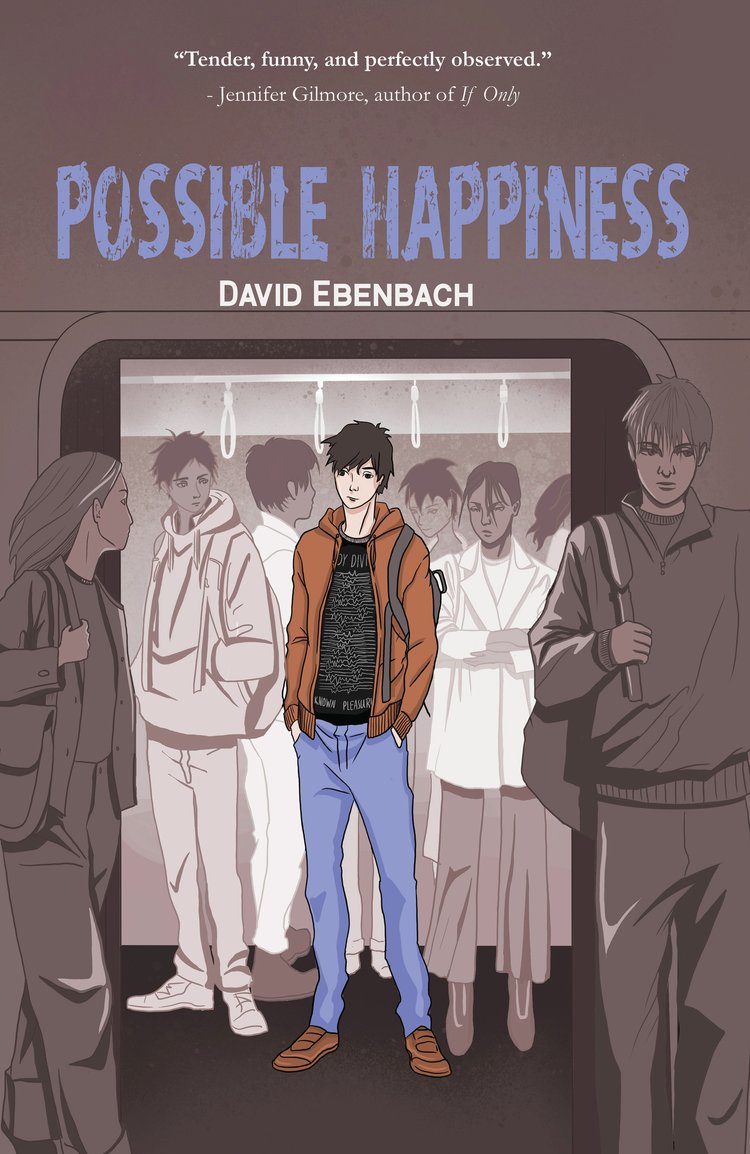
TBR: Possible Happiness by David Ebenbach

TBR [to be read], a semi-regular, invitation-only interview series with authors of newly released/forthcoming, interesting books.


Give us your elevator pitch: what’s your book about in 2-3 sentences?


A loner teen accidentally unlocks a social life with his sense of humor—but can he unlock meaningful happiness that way, too, or will he first have to face and understand himself?


Which character did you most enjoy creating? Why? And which character gave you the most trouble, and why?


The book is told from the point of view of Jacob—that loner teen from the elevator pitch—and I really enjoyed spending time with him. He’s based (very loosely) on a teenaged me (and the book is set back in the late 80s, when I was a teenager), and so it was like hanging out with a version of my younger self, getting to observe all of the hopeful foolishness and chaotic earnestness—but from a semi-safe distance this time around.


His friends were harder to write, because of the particular nuance I was trying to capture: that these characters could be perfectly great people, and yet still struggle to supply whatever it was that Jacob ultimately needed. In that way, folks can be disappointing without actually being at fault.


Tell us a bit about the highs and lows of your book’s road to publication.


Well, the lowest low was when my agent told me that the book wasn’t to his taste and didn’t feel like he was the right person to submit it to presses. Yeah—that was a low point. He said it nicely, though—he’s still my agent—and he told me it was okay if I wanted to take it out to presses myself. He’s not a possessive guy. And so I did take it out myself, and luckily found people who connected with the book more than my agent did.


In particular, Regal House Publishing got excited. So one big high was them sending the contract, and me signing it. After that, there were the usual rounds of editing and proofreading and finalizing a cover and so on, all of which were smooth. And then, finally—I started working on this book back in 2016—Regal House sent me a physical copy of the book. That’s a very high point right there. As Salman Rushdie writes in his excellent new memoir, Knife, “the best moment of the whole process of book publication is this one, the moment when you hold your printed book in your hand for the first time, and you feel its reality, its life.”


What’s your favorite piece of writing advice?


Don’t write what other people want you to write; write what you have to write.


My favorite writing advice is “write until something surprises you.” What surprised you in the writing of this book?


This is such an interesting question, and a hard one for me to answer. In a certain sense, everything surprises me when I write a book—I never know how it’s going to play out before I get to the page. Or at least I never know that I know. Because, in another sense, nothing about the process surprises me. In fact, I typically write not toward surprise but instead toward whatever is most emotionally difficult for me to get into. The hard stuff that’s already there and that maybe I’m somewhat aware of, the way that you’re aware of shadows in the room, but that I haven’t been willing to look at directly. And so, a lot of the time my writing process is more about uncovering than about discovering. Maybe the surprise, each time, is that I’m able to go there—and come back out unharmed.


How did you find the title of your book?


Coming up with Possible Happiness, the title of this book, was a process. Oy. For a long time I called it Fern Rock, after the Philadelphia Broad Street Subway stop—but that made it sound like the novel was happening in some rural paradise instead of in one of the grittiest cities in America. So I lost faith in that option and just called the book “that high school novel” for a long time. It remained “that high school novel” through failed experiments with titles like Where Do the Children Go (based on a song from the time), Subway-Surface (based on public transportation), and We’re Getting There (the actual, I’m-not-making-it-up slogan of SEPTA, Philly’s public transportation organization, for many years). None of it really suited this particular high school novel.


And then I thought about the scene where protagonist Jacob goes into a kind of occult shop on South Street where all of the purported potions have anti-lawsuit hedges in their names like “so-called” or “alleged,” and he sees something called Possible Happiness Syrup. I thought: that’s what my guy needs. He needs a possible happiness. He needs to stop fighting for some generic kind of happiness that works for everyone else or some magical kind of happiness that only works in the movies. He needs to turn his effort toward getting a real happiness, one that’s possible for him.


Inquiring foodies and hungry book clubs want to know: Any food/s associated with your book?


Well, the main character is a teenager, and not so great in the kitchen, so he’s not the kind of person who produces recipes. When he’s home alone, his single mother working yet another double-shift, he just heats up some frozen mac’n’cheese. So maybe that could make for a good book club treat? Though, if you want to be true to the time period (late 80s), you’ll have to find the Stouffer’s frozen mac that comes in a foil tray, and you’ll have to heat it up in a conventional oven. It takes a while, but it’s worth it.


*****


READ MORE ABOUT THIS AUTHOR: https://www.davidebenbach.com/


ORDER THIS BOOK FOR YOUR OWN TBR STACK: https://regal-house-publishing.mybigcommerce.com/possible-happiness/


Monday, August 12, 2024

TBR: A Season of Perfect Happiness by Maribeth Fischer

TBR [to be read], a semi-regular, invitation-only interview series with authors of newly released/forthcoming, interesting books.


Give us your elevator pitch: what’s your book about in 2-3 sentences?


Ten years before A Season of Perfect Happiness begins, Claire had a life she loved:  She lived in a beautiful beach town, was close to her family, had great friends, and was married to her high school sweetheart. When a tragedy upends it all, she understands that her only chance to have “a normal life” is to start over in a new town. Now, after nearly a decade in Genesee Depot, Wisconsin, she’s finally ready to find love, even happiness. But what of her past does she owe her new friends or the man with whom she falls in love? This is the question at the heart of the novel: What is our most authentic self? The one we try to hide or the one we strive each day to be?  


Which character did you most enjoy creating? Why? And which character gave you the most trouble, and why?


I loved writing Annabelle, the ex-wife of the man Claire falls in love with, and Claire’s closest friend.  Right there, you have a complicated, tangled relationship. In an early draft, a reader told me she didn’t find it believable that an ex would get so friendly with the new woman. But I’d grown up in a family where my dad and stepfather became close friends, and I knew it was possible. I loved the challenge of making Annabelle and Claire’s friendship believable. Annabelle was fun too because she herself is fun, and funny, smart and generous. But she is also damaged and insecure and so ends up causing enormous damage to the people she loves. So far readers have loved and hated her all at once, which thrills me!


The most difficult character was Claire’s former best friend, Kelly, who didn’t want Claire in her life after the tragedy (which was connected to Kelly). I didn’t always understand why Kelly would be so unforgiving and I had to work hard to figure her out…


Tell us a bit about the highs and lows of your book’s road to publication.


The highs

·       Getting the first email from my editor at Dutton, which began, “welcome home.” Dutton had published my first book 20 years earlier. It felt like a homecoming.

·       Seeing the cover for the first time,

·       My dad, who was the first one to read the galley, calling in tears to tell me he’d finished it in two days—and couldn’t stop thinking about it.

·       A similar call from my older brother and my mom

·       Seven months before the release date, having the event coordinator at my local library (Lewes Public Library) and the owner of my local independent bookstore (Browseabout Books) telling my publicist that they wanted to host a launch party for me. Arrangements were made and the event was ready for RSVP’s in a less than an hour. I felt so lucky and grateful to live in the community I do.


The lows


·       Redoing a major piece of the plot—and having to do it in ten days. So, basically rewriting the novel in little more than a week. I didn’t, sleep, eat, bathe! But also in this, my husband, when I said, “I can’t do this. It’s not possible,” looked at me and responded, “What do you mean? This is what you do, Maribeth. This is who you are. Of course you can do it.” His saying that, his unequivocable belief in me? That’s another high.  


What’s your favorite piece of writing advice?


Write big and messy; write way more than you’ll ever need and then edit. Along with this is my favorite quote, by Elie Wisel. “There is a difference between a book of two hundred pages from the very beginning, and a book of two hundred pages, which is the result of an original eight hundred pages. The six hundred pages are there. Only you don't see them.”  


My favorite writing advice is “write until something surprises you.” What surprised you in the writing of this book?


Near the end of A Season of Perfect Happiness a minor character suddenly sort of stepped out of the pages and came alive in a way that allowed me to see a whole other aspect of him. I didn’t need him to do this 40 pages from the end of the book, but the novel is so much better because he did.  


How do you approach revision?


I love revision. It’s part of my “write big and messy.” I meet with poet and novelist, Anne Colwell every week to review our writing (and we’ve been doing this for twenty years) and every place she says, “I could stay here awhile,” meaning, “I want more,” I dive in and see how far I can take the scene she’s questioning or the backstory or the thoughts she wants my character to consider. I write into the story as long and as deeply as I can. I have never not discovered something important that I needed to know in doing this.


Inquiring foodies and hungry book clubs want to know: Any food/s associated with your book? (Any recipes I might share?)


Alas, no…but the book mostly takes place in Wisconsin, so there’s always bratwurst…


****

MORE INFORMATION ABOUT THIS AUTHOR: https://www.maribethfischer.com/


ORDER A COPY OF THIS BOOK FOR YOUR OWN TBR STACK: https://browseaboutbooks.com/book/9780593474679


Monday, July 8, 2024

TBR: Our Kind of Game by Johanna Copeland

TBR [to be read], a semi-regular, invitation-only interview series with authors of newly released/forthcoming, interesting books.


Give us your elevator pitch: what’s your book about in 2-3 sentences?


I first described the book as, “It’s about women who do bad things to violent men,” which always got an “Oooh!” My team at Harpers softened it to “A book that asks what it means for a woman to be in control of her own life.”


Which character did you most enjoy creating? Why? And which character gave you the most trouble, and why?


Paula, Paula, Paula! She was, by far, the most difficult character to write because her voice is so particular. With limited formal education and an undiagnosed learning disorder, her voice is less educated, but I needed readers to trust and respect her intelligence. It was a difficult balance, but with each subsequent draft she became my favorite character because Paula functions as the moral center of the book.


Tell us a bit about the highs and lows of your book’s road to publication.


The road to publishing this book has been ridiculously fun. Like the Anne Hathaway movie about a woman who gets a book published. In brief, this book was pre-empted by my favorite editor of the group who made offers. Since that time, my team has been amazing. However, this experience comes after starring in no less than three horror movies filmed over the previous decade, where a woman questions her life choices after going out on endless rounds of fruitless submission.


What’s your favorite piece of writing advice?


Persevere, but be kind to yourself. I’m good at the first part of that advice and terrible at the second part. I always forget that writing is actually hard work. As though plot, setting and dialogue should just flow, right?!? When they don’t, I assume the problem is me. This is when I have to take a step back and remind myself that writing is actually a difficult job and I shouldn’t be so mean to the writer.


My favorite writing advice is “write until something surprises you.” What surprised you in the writing of this book?


So many of the twists in this book revealed themselves as I was writing it. That’s something that always happens, but still catches me by surprise. I wish I wrote from an outline so I could avoid the stress of not knowing how outstanding threads will weave into the plot, but I’m just not that person. In this book, there’s a twist/reveal in the last chapter that didn’t come until the fourth revision. It was hanging out there unresolved, then suddenly it clicked. For me, those moments are the most surprising and satisfying parts of novel writing.


Who is your ideal reader?


Our Kind of Game is marketed as a domestic thriller or women’s fiction, which makes it a little weird that my ideal reader is men in heterosexual relationships. While it’s a cathartic read for women, the men who’ve read it tell me it challenged their perceptions around the way they think about their partner’s domestic labor. I can’t imagine a better outcome for a reader than a book that challenges preconceived notions and entertains.


Inquiring foodies and hungry book clubs want to know: Any food/s associated with your book?


Ahahaha, I have a great recipe for canned cherries! I can’t say anything else without it being a spoiler, but after people read this book, they’ll understand why that question made me laugh out loud.


*****


READ MORE ABOUT THIS BOOK: https://www.harpercollins.com/products/our-kind-of-game-johanna-copeland?variant=41141589966882


ORDER THIS BOOK FOR YOUR TBR STACK: https://bookshop.org/p/books/our-kind-of-game-johanna-copeland/21024793


Work-in-Progress

DC-area author Leslie Pietrzyk explores the creative process and all things literary.