Monday, January 28, 2019

TBR: Things You Won’t Tell Your Therapist: Stories by Colleen Kearney Rich

TBR [to be read] is a semi-regular, invitation-only interview series with authors of newly released/forthcoming, interesting books who will tell us about their new work as well as offer tips on writing, stories about the publishing biz, and from time to time, a recipe! 


Give us your elevator pitch: what’s your book about in 2-3 sentences?

THINGS YOU WON’T TELL YOUR THERAPIST is a collection of flash fiction about people with secrets. Everyone in the book has something to hide and the reader gets a glimpse into their private moments.

Which story did you most enjoy writing? Why? And, which story gave you the most trouble, and why?

The story that was the most fun to write was “Petty Cash.” I wrote the first draft in a Kathy Fish online Fast Flash workshop. What I love about those workshops is that you are writing fast and don’t have time to do a lot of second-guessing about the story’s viability. It came out pretty much intact, and I love that. I wish they all just flowed like that and that I knew immediately where the story was going.

The title story gave me the most trouble. I have always wanted to write a list story, but I just couldn’t make it work in that form. I’m very happy with the resulting story, but I still haven’t written a successful list story. Maybe this year.

Tell us a bit about the highs and lows of your book’s road to publication.

The highs are probably also the lows. I submitted the chapbook to a lot of contests and had to recompile the manuscript each time to meet the contest’s submission rules (page counts, table of contents, etc.). It was finalist in in the Black River Chapbook Competition at Black Lawrence Press and on the short list for the Santa Fe Writers Project awards. I didn’t win. These are two of my favorite publishers, and I would love to work with them one day. It was really rewarding to know some people out there liked the book enough to make it a finalist.

While I was at the Hambidge Center in Georgia for a writing residency, I decided to submit it during Finishing Line Press’s open reading period. They were interested in it. They are primarily a poetry publisher, but the format works with flash. Several of my stories are a single paragraph.

What’s your favorite piece of writing advice?

Strunk and White’s The Elements of Style still has some of the best writing advice there is. One I live by is: Omit needless words. Writing “tight” in both fiction and nonfiction is critical. Omitting needless words and tightening up other’s writing is a big part of my day job as a magazine editor. I know it is heart breaking to have to “kill your darlings”(another great piece of writing advice from William Faulkner), but it is necessary if you are writing for an audience. Readers don’t have a lot of patience so I feel it is important to not waste their time. One of the things I love about writing flash is the paring down of the text so that every word matters.

I am a fiction editor at Literary Mama, and I think overwriting is what causes a lot of stories to fail. Sometimes I can see the bones of the story that the writer is trying to tell, but they are writing all over the place.

My favorite writing advice is “write until something surprises you.” What surprised you in the writing of this book?

I was surprised at how many dogs show up in the book, and I am still really puzzled by it. I don’t have a dog. I am more of a cat person. In fact, my elderly cat is sitting here with me as I type this. Good thing she can’t read. I need to write more cat stories.

How do you approach revision?

For me, getting distance from the work is a big part of revision. I do like putting things away for a little while. When writing, I am so immersed in the scene that I really can’t see typos or missing words. When I take a break from it, it breaks that spell and I can see everything so much clearer. I also have a writing group that I rely on. It is really valuable to have those early readers to flag things that they are confused by and get a general reaction to a piece.

Inquiring foodies and hungry book clubs want to know: Any food/s associated with your book? (Any recipes I might share?)

Belgian waffles! In one of the stories that takes place at a diner. But, like the woman in the story, I don’t make them at home. I have recently shopped for a waffle iron but haven’t taken the plunge yet. Do you have a waffle recipe? I would like to find a good one.

(EDITOR’S NOTE: I don’t make Belgian waffles, but I swear by the classic waffle recipe in The Joy of Cooking, my go-to cookbook since the olden days. And let the record show that I’m afraid to use that whole cup of butter…half a cup feels daring enough. Recipe: https://www.epicurious.com/recipes/member/views/waffles-from-the-joy-of-cooking-50154323)


READ MORE ABOUT THIS BOOK AND PUBLISHER: https://www.finishinglinepress.com/

ORDER THIS BOOK FOR YOUR OWN TBR PILE:

READ THE TITLE STORY:


Monday, January 21, 2019

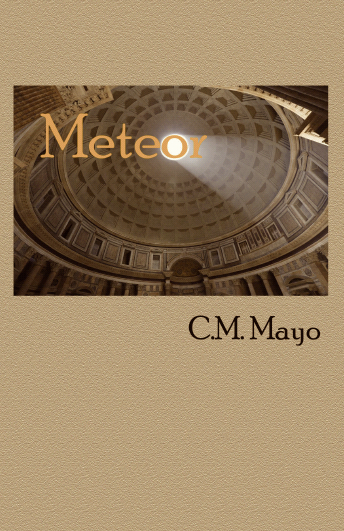
TBR: Meteor by C.M. Mayo

TBR [to be read] is a new feature on my blog, a semi-regular, invitation-only interview series with authors of newly released/forthcoming, interesting books who will tell us about their new work as well as offer tips on writing, stories about the publishing biz, and from time to time, a recipe! 


We don’t expect an elevator pitch from a poet, but can you tell us about your work in 2-3 sentences?

Meteor is a pocket-constellation of persona poems. In other words, these are not memoir but confections of the imagination. They are also— to steal part of the title of an anthology in which the title poem appeared— my goodbye to the Twentieth Century. (That anthology was American Poets Say Goodbye to the Twentieth Century, edited by Andrei Codrescu and Laura Rosenthal.) I think of this collection, starting with “Meteor” and ending with “The Building of Quality,” as my song to and of the twilight of the Pax Americana.

What boundaries did you break in the writing of this book? Where does that sort of courage come from?

I don’t know if there is a boundary between poetry and fiction, but if there is I broke it. Many of of these poems I had originally considered flash or micro fictions, and indeed a few were originally published as short stories— but then I had too much fun chopping up and arranging stanzas! Does this take courage? Yes and no. Yes, because making any art takes courage; there is always the risk that someone, for whatever bizarre or valid reason, may attack your work. On the other hand, no, this does not require courage. I’m old enough to realize it’s just sad that someone who would attack my work doesn’t have anything better to do. In my experience, those who attack other artists are even better at attacking themselves.

Tell us a bit about the highs and lows of your book’s road to publication.

It was mostly low, as in deep down in the salt mines, nicely preserved. These poems were written by a younger poet who moved on to writing tomes of nonfiction and an epic historical novel and, somewhere in there, edited a literary magazine and a collection of Mexican writing in translation. From my informal polling of published poets it can take many, many, many and multitudinous submissions before a book of poetry gets published. Let’s just say, that sounds believable to me. In the poetry world a common path to publication is to submit your manuscript to a contest to be judged anonymously—your name and address and any other identifying information stripped off the manuscript. I submitted the manuscript to contests, but irregularly, lackadaisically. About a year ago I decided it was time to make this happen and, bingo, it did. Linwood D. Rumney, author of Abandoned Earth, who selected Meteor for the Gival Press Award for Poetry, and whom I look forward to meeting one day, I send you showers of lotus petals!

What’s your favorite piece of writing advice?

If you want to do it, you’ll do it. If you want to watch TV and scroll through social media, you’ll do that. You could train a giraffe to ice-skate, if you really wanted to. Now whether there’s a market that wants to fill a stadium to watch your ice-skating giraffe, that’s another question. And the market isn’t everything. Sometimes the market is just stupid. I’m thinking of Roman entertainments. They liked to watch giraffes getting gored by rhinos.

My favorite writing advice is “write until something surprises you.” What surprised you in the writing of this book?

The same thing that has surprised me in writing all of my books, that there is a door in consciousness that opens.

Who is your ideal reader?

Someone who can contemplate nuance and ambiguity and, above all, see with the heart.

Inquiring foodies and hungry book clubs want to know: Any food/s associated with your book? (Any recipes* I might share?)
  
No, but I will be delighted to share my recipe for baba ghanoush. Roast a bunch of eggplants whole. When cool, peel off the skins. With a fork, mash the eggplant with tahini, lemon juice, salt, pepper, olive oil, and plain good quality yoghurt. This will look like a nasty grey mess, but that’s OK, it tastes great. Sprinkle parsley and paprika on top for both added flavor and color.

READ MORE ABOUT THIS AUTHOR: www.cmmayo.com

ORDER THIS BOOK FOR YOUR TBR PILE: http://www.cmmayo.com/METEOR/index.html

READ A POEM FROM THIS BOOK, “In the Garden of Lope de Vega”:

NOTE: Look for C.M. Mayo at the AWP Conference in Portland in March!

March 29 ~  Gival Press 20th Anniversary Celebration Reading event, 7 PM

March 30 ~ signing at the Gival Press table in the bookfair, 10 AM - 11:30 AM


Tuesday, January 15, 2019

Plan Ahead for February!

Another class I'm excited about, especially since it's in my own town of Alexandria at the beautiful Torpedo Factory arts center!


Thursday, February 21, 2019
CBAW + Torpedo Factory Art Center Creative Writing Workshop
Hosted by Community Building Art Works and Torpedo Factory Art Center
6:30 PM ~ 8:30

No creative writing experience required! Join Community Building Art Works for our monthly community building creative writing workshop in partnership with the Torpedo Factory Art Center. February's workshop will be led by author Leslie Pietrzyk. Doors at 6:30, workshop begins promptly at 7 pm.

About the Workshop: Scene-Building: Making Your World Real
Learn some tricks and tips about how to create lively, interesting scenes that will make your readers feel right there with you. Appropriate for prose writers at all levels of experience. (And poets who want to play with prose!)

Registration:

Friday, January 11, 2019

January Prompt Class at Politics & Prose

Join me! This class is always fun and productive...beginners welcome, as are more experienced writers.


Tuesday, January 29, 2019
6:30-9 p.m.
Class:
Right Brain Writing: People
Politics & Prose Bookstore
5015 Connecticut Avenue NW
Washington, DC

Explore your creative side in this session, one of a series of stand-alone classes with prompts designed to get your subconscious flowing. Through guided exercises, we’ll focus on writing about the people in our lives—the people we know, the people we think we know, and, of course, the deepest mystery of all: ourselves. No writing experience necessary! This is a great class for beginners and also for those fiction writers and/or memoirists with more experience who might be stuck in their current projects and are looking for a jolt of inspiration. Our goal is to have fun in a supportive, nurturing environment and to go home with several promising pieces to work on further.  Please bring lots of paper and pen/pencil or a fully charged computer.

More information/registration: https://www.politics-prose.com/class/right-brain-writing-people-1930

Monday, December 17, 2018

Favorite Books (I Read) of 2018


As usual, this list is taken from the books I’ve read during 2018. Who cares what year a good book was published, really? I believe in buying lots of books and then letting them rise to the surface at the right time. I also believe in keeping this list to 10ish, so I’ve forced myself to be ruthless. What are the books I urged onto other people? The books that haunt me months later?

One difficulty with my list is that I try to keep it free of books written by my friends, which feels more honest to me, but I am lucky to have SO MANY accomplished and prolific writer friends! Also, in this age of social media, is someone I know from Facebook a “friend” or a friend? What if I met someone once at an event…are they my friend/“friend” and therefore excluded from my list? My imperfect solution is to keep a separate, unranked list of books I loved that I read this year that were written by my friends (below) and hope no one hates me. Also, I did let one book blur the “friend”/friend line to sneak onto the first list.

Presented in random order:

Another Brooklyn, Jacqueline Woodson: I read this in a single morning and ached all day for these young girls. 

The Power, Naomi Alderman: Smart, dark, well-constructed…and a book you’ll want to discuss immediately with someone as you turn that last page. If you have a book club, this one should be required reading!

An American Marriage, Tayari Jones: This author is a dazzling reader/presenter of her work, so catch her if you can; this book is utterly absorbing, about a newlywed African-American man accused of a crime he didn’t commit and what happens to a fledgling marriage.

You Think It, I’ll Say It, Curtis Sittenfeld: What delightfully dark and modern humor. Each story felt complete yet I longed to read more, more, more. Spin each of these stories off into a novel, please.

Against Football: One Fan’s Reluctant Manifesto, Steve Almond: This non-fiction book made me queasy because the author totally—with verve and vigor—nailed each and every awful thing about the football industrial complex…yet I still find myself shouting, “Get him!” at my TV screen on Sunday afternoons this autumn. Thought-provoking in the best way.

Eleven Kind of Loneliness, Richard Yates: A reread of this classic story collection. I wrote in my book journal, “Like stepping into an Edward Hopper painting,” and I’m pretty sure saying more than that won't create a clearer picture of these bleak and human stories.

The Great Believers, Rebecca Makkai: About the AIDS crisis in Chicago in the 80s and a totally immersive book that will break your heart even as you can’t stop turning the pages. There’s a modern storyline interwoven, ensuring that we feel the ripple effects of this tragic epidemic.

Sharp Objects, Gillian Flynn: Creepy, complicated characters doing creepy, complicated things. I found the TV show to be addictive, but the book topped the show. Really, I suggest checking out both.

Calypso, David Sedaris: Deep and hard exploration of family and loss. Yes, he’s funny, of course. But he’s so much more, and that final revelation will mule-kick you in the gut. I’d read many of these pieces previously in The New Yorker but encountering them arranged with an arc in mind gave new resonance. Also, I didn't think much about the title until I did, doing some minor research, and there's more and deep resonance with this choice.

Educated, Tara Westover: A memoir about a girl who grew up in a fundamentalist Mormon family in Idaho, so beyond convention that the youngest kids never went to school. Yet the author manages to extricate herself from this insular world. Harrowing and relentless and brutal in its honesty: yet the author never neglects to treat even the villainous people with compassion and humanity. Extraordinary. If I had to select one book that was my favorite of the year, right this minute it would be this one. (Runners-up are The Great Believers and An American Marriage.)

The Perfect Nanny, Leila Slimani: I loved how the author of this novel captured the nuances of the uncomfortable relationship the domestic “employer” has with the domestic “employed,” the trickiness of outsourcing family labor traditionally done by women. There’s a dramatic and horrible opening…yet in my mind that almost isn’t even the point of this chilly and chilling book.

Descent, Tim Johnston: Depending on the kind of reader you are, you’ll pick this up for the literary cred and stay for the suspense, or vice versa. In any event, this book delivers both, multiplied by 1000, as a family deals with the abrupt disappearance of teenage daughter/sister. I defy you to close this book once you reach the last third! (This is the “friend” book that I fudged into this section because, well, just because I’m in charge here! And because I was reading it on an airplane and was GRATEFUL the plane had to circle for 20 extra minutes so I could finish reading it!)


BOOKS I READ BY MY FRIENDS AND “FRIENDS”

How to Sit, Tyrese Coleman: A hybrid mix of fact and fiction, these stories and essays left me breathless, and not just because the author was in one of my fiction workshops at Johns Hopkins, but because the writing is that assured. (A debut!)

Second Shift, essays, Susan Tekulve: Travel and food explored with a nuanced, observant eye, evoked in exquisite language.

Monsoon Mansion, Cinelle Barnes: A ravishingly assured debut memoir by one of our Converse MFA grads who grew up in dire circumstances in the Philippines and who found a way to survive to tell the tale, elegantly. (A debut!)

Sad Math, poems, Sarah Freligh: The type of poetry I love most of all, accessible yet resounding with heartfelt depth, like the continued quiver of a tuning fork.

The Second O of Sorrow, poems, Sean Thomas Dougherty: The Rust Belt gets so much clear-eyed, deeply honest love here that it’s impossible not to see beauty, not to feel an endless ache.

The Promise of Failure, John McNally: A smart and honest memoir/craft book about the author’s (and our) ongoing struggles with the writing life and how failure fits into that life (and any life, really).

The Incurables, Mark Brazaitis: Tough linked short stories about tough people trained to be stoic; the title story is especially incredible.

Crumb-Sized, poems, Marlena Chertock: Don’t let the science motif intimidate you; these poems are personal, revealing, and stunning. And a gold star for the lovely book design!

This Could Hurt, Jillian Medoff: I think the workplace is under-represented in literary fiction, especially when I see the riches available when one of the primary characters is a sharp-eyed female corporate boss lost in New York City’s rat race.

The Accidental Bride, Janice Harayda: When you want a totally light-hearted, amusing & charming but also SMART book about wedding woes!

First Comes Love, Marian Winik: A harrowing & deeply honest memoir about being in love with the wrong person who is also exactly the right person.

Carry Her Home, Caroline Bock: Linked stories about grief and family and a New York of the past. (I first met the author in one of my classes at Politics & Prose!) 

The Balcony, Jane Delury: France, the French, and lots of food! For some that might be all you need to hear! For the rest, this novel-in-stories is an elegant evocation of a house in France and its complex history. (A debut!)


Monday, December 10, 2018

TBR: We Can Save Us All by Adam Nemett


TBR [to be read] is a new feature on my blog, a semi-regular, invitation-only interview series with authors of newly released/forthcoming, interesting books who will tell us about their new work as well as offer tips on writing, stories about the publishing biz, and from time to time, a recipe!


Give us your elevator pitch: what’s your book about in 2-3 sentences?

Welcome to The Egg, an off-campus geodesic dome where David Fuffman and his crew of alienated Princeton students train for what might be the end of days: America is in a perpetual state of war, climate disasters create a global state of emergency, and scientists believe time itself may be collapsing. Funded by the charismatic Mathias Blue and fueled by performance enhancers and psychedelic drugs, a student revolution incubates at The Egg, inspired by the superheroes that dominate American culture. As the final superstorm arrives, the students toe the line between good and evil, deliverance and demagogues, the damned and the saved. 


Which character did you most enjoy creating? Why? And, which character gave you the most trouble, and why?

I really enjoyed writing Haley Roth, the female protagonist of the book, probably because she was the most challenging to write. She’s both the moral center of the book and yet she operates in a moral gray area, but ultimately she’s the heart of the story and maybe the one true superhero. She’s funny and complicated and resilient and an all-around badass. I credit my editor, Olivia Taylor Smith, for encouraging me to add a substantial number of pages—mostly from Haley’s POV—fairly late in the editing process. I think this freedom to write and push for a longer book not only made Haley’s character more compelling, but really brought the whole story together in an important way.

Tell us a bit about the highs and lows of your book’s road to publication.

The book took 12 years—nearly 13 by the time of this writing—to reach publication, so there was a large quantity of both highs and lows. I wrote a piece of flash fiction in late 2005 that got published in an anthology called The Apocalypse Reader. This first taste of publication was a huge high that gave me the confidence to turn the short story into a novel. I wrote most of the first draft during my MFA program at California College of the Arts (my MFA experience was another highlight) and finished it at a Vermont Studio Center residency in 2008. I spent a few years revising and tightening it up, and then began looking for an agent in 2011. It took a long time to find representation, and this was a low…but also an important part of the process. Each time I got a rejection, it usually came with thoughtful feedback on how to revise, plus an offer to resubmit. So I’d spend months or sometimes years making these revisions—typically major revisions of the story structure and how we move through time in linear vs. nonlinear ways. Eventually after losing track of each other four years earlier, I got signed by Noah Ballard at Curtis Brown in early 2017. He and I did one more big revision and then he sold the book to The Unnamed Press in late 2017, at which point I did another pretty substantial revision with Olivia. Working with Unnamed has been a massive high—the kind of personal attention and support that’s come with an independent press, their appetite for “challenging” material that doesn’t fit neatly into a particular mold, and they’ve generated a lot of publicity and brought the book out to a wider readership than I ever imagined. It took a while, but I feel extremely lucky to have landed with my agent and my publisher.

What’s your favorite piece of writing advice?

I’m not sure who said this originally (I should probably find out) my one of my CCA mentors, Tom Barbash, relayed a piece of advice: a great day of writing is one where you get your character from the kitchen to the living room. That’s it. For me, writing is very incremental, just consistent/persistent effort to get a few more pages and then do the same thing again the next day and the next and then go back and fix that and push a little further. That piece of advice helped me realize the discipline necessary to work as a writer. Joyce Carol Oates (my undergraduate thesis advisor) also once told me, “You might be just masochistic enough to be a real writer,” so I think that stuck with me and plays into how I perceive the writing process, for better or worse.

My favorite writing advice is “write until something surprises you.” What surprised you in the writing of this book?

That it actually got finished and published. And that real other human beings are now reading it and enjoying it! It’s what I’d always dreamed about, but still!

How do you approach revision?

I approach revision as a natural part of the writing process, one and the same. I’m producing new paragraphs and pages, and I’m getting rid of old ones that don’t sound as good this week as they did two weeks ago. I think time plays an important role—what feels great the night it’s written may not work so well two weeks later, and for me it’s important to allow for that fermentation period to see if something ends up being right. But I also love the revision process—some writers dread it—so I don’t mind reworking things for months and years, because I’m constantly learning new things throughout this process—about the story and about myself and what I actually believe.

Inquiring foodies and hungry book clubs want to know: Any food/s associated with your book? (Any recipes* I might share?)

The main food from my novel that jumped to mind is a Batman sheetcake, and that probably won’t work for these purposes. So I’ll mention a traditional survival superfood that shows up in the book: pemmican. You can read about pemmican online, but it’s kind of the OG energy bar, and can be consumed for years or decades if stored properly. It’s based on dried meat, a bit like jerky, except it also contains fat and typically some kind of dried fruit or nuts, so it’s a more complete food source that survivalists claim to be able to live on for weeks. Recipes online vary, and I’m no expert, so Google around a bit. But here’s the basic idea and two recipes I stole, one with lean meat and one with already-dried meat, both from https://www.wildernesscollege.com/pemmican-recipes.html 
[SCROLL FOR RECIPES]

READ MORE ABOUT ADAM NEMETT: www.AdamNemett.com

ORDER THIS BOOK FOR YOUR TBR PILE:

ESSAY ABOUT THE BACKGROUND OF THIS BOOK:  

Recipe # 1
Ingredients:
  • 4 cups lean meat (deer, beef, caribou or moose)
  • 3 cups dried fruit
  • 2 cups rendered fat
  • Unsalted nuts and about 1 shot of honey

Instructions:
Meat should be as lean as possible and double ground from your butcher if you do not have you own meat grinder. Spread it out very thin on a cookie sheet and dry at 180 degrees F for at least 8 hours or until sinewy and crispy. Pound the meat into a nearly powder consistency using a blender or other tool. Grind the dried fruit, but leave a little bit lumpy for fun texture. Heat rendered fat on stove at medium until liquid. Add liquid fat to dried meat and dried fruit, and mix in nuts and honey. Mix everything by hand. Let cool and store. Can keep and be consumed for several years.

~~~~~~~

Recipe # 2
Ingredients:
  • 2 lbs dried beef (see recipe 1 for drying instructions)
  • 1.5 cup raisins
  • Beef suet

Instructions:
Grind meat to fine pulp in a blender. Now add in the raisins. Chop this mix enough to break up the raisins and mix in well. Melt the suet to a liquid and pour into the mixture, using just enough to hold the meat and raisins together. Now allow this to cool slightly. Put this into a pan and let it cool completely. Next, cut the pemmican into strips, then divide it into bars of about 4” long by 1” wide. Bag these separately and you can store them for several months.


Tuesday, December 4, 2018

New Piece of Flash Up on Cleaver Magazine!


I drafted this in my prompt writing group, when the words we wrote to were, first, “winter” and then 15 minutes later, “distance.”

Here’s the opening:

Like you’re supposed to hate winter, with its cold and mountains of snow and how slip-walking on ice is a bitch and all that shit. Honestly, I love it. Honestly, I’d move to Alaska or the Arctic Circle or the South Pole if anyone would let me. In another life, I’d beg to be a penguin. Or a polar bear, except they’re going extinct. Jase is staring at me like he always does when I’m not talking, like I’m supposed to entertain him with “scintillating” chatter 24/7, and whenever I’m not doing that I’m only a girl who’s failing in some deep and significant way.

Only about 800 more words to go, so you might as well read the rest, here.

Work-in-Progress

DC-area author Leslie Pietrzyk explores the creative process and all things literary.