Monday, July 17, 2023

TBR: Off to Join the Circus by Deborah Kalb

TBR [to be read] is a semi-regular, invitation-only interview series with authors of newly released/forthcoming, interesting books who will tell us about their new work as well as offer tips on writing, stories about the publishing biz, and from time to time, a recipe.  


Give us your elevator pitch: what’s your book about in 2-3 sentences?


OFF TO JOIN THE CIRCUS is about an overly enmeshed, neurotic Jewish family in the Washington, D.C., suburbs, and what happens when a legendary relative returns after 64 years. Adele Pinsky ran away at 16 from her home in West Orange, New Jersey, perhaps to join a circus, and she reappears when her younger brother, Howard, is turning 75. The book features Howard’s family—wife Marilyn, daughters Sarah, Diana, and Lucy, and grandsons Max and Will—as they prepare for a bar mitzvah and the birth of a baby, and deal with Adele’s (re)entry into their midst.


Which character did you most enjoy creating? Why? And, which character gave you the most trouble, and why?


I’d like to say that I most enjoyed creating Adele. She’s a woman of mystery, and for that reason I never tell any of the story from her perspective. The seven other family members, who are all point-of-view characters, are absorbing her arrival and what it means for them—they’ve created an entire mythology given her lengthy absence--and finding that she’s shifted their perspectives about family and what really matters.


Howard and Marilyn’s oldest daughter, Sarah, perhaps gave me the most trouble because her worried state of mind reminded me too much of myself. It was harder to make the chapters from her point of view as funny as the others.


Tell us a bit about the highs and lows of your book’s road to publication.


The highs: finding a publisher, Apprentice House, based at Loyola University in Maryland. I was absolutely delighted when they agreed to publish it, and have enjoyed working with them. The lows probably center around sending the novel to dozens of agents who all rejected it.


What’s your favorite piece of writing advice?


Keep on trying! I know it can be discouraging to get rejections from agents or publishers, but I believe persistence will pay off in the end. Something I’m still telling myself about a mystery novel I’ve been working on for literally decades now! 


My favorite writing advice is “write until something surprises you.” What surprised you in the writing of this book?


Great question! My character Lucy, the youngest of the three daughters, is recovering from a divorce. I thought Lucy and ex-husband Jeff’s marriage ended for one reason, and then Lucy and I discovered together that actually it was another reason entirely! I won’t give anything away here, but it was one of those moments when you shake your head and wonder why that hadn’t occurred to either of you before!


How did you find the title of your book?


I’m not usually great at coming up with titles (and when I was a journalist, I wasn’t great at coming up with headlines). But this title made sense to me immediately. When Adele first leaves, 11-year-old Howie asks his dad where she went, and the dad waves his hands in the air and says, “Off to join the circus, Howie.” Being 11, Howie takes it literally, and even when he’s older, he wonders if perhaps the missing Adele could have joined the circus. The circus, and the idea of being someone who even possibly could join a circus, becomes part of Pinsky family folklore.


Inquiring foodies and hungry book clubs want to know: Any food/s associated with your book?


One of my characters, Diana’s husband, Philippe, is a chef. He’s from Belgium, and runs a restaurant called Diana’s that serves various Belgian specialties. Knowing very little about chefs, Belgian food, and how to run a restaurant, I consulted a chef friend. All errors in this regard are my own. Philippe turned out to be one of my favorite characters. Marilyn, who is a retired English professor rather than a chef, also seems to spend a great deal of time cooking for huge groups of relatives who descend on her. She makes an impromptu vegan stir-fry that she finds quite delicious.


*****

READ MORE ABOUT THIS AUTHOR: http://www.deborahkalb.com/


ORDER THIS BOOK FOR YOUR TBR STACK:

https://www.amazon.com/Off-Join-Circus-Deborah-Kalb/dp/1627204490/ref=sr_1_2?crid=20W5AOS8I2VHT&keywords=deborah+kalb&qid=1683736289&sprefix=deborah+kalb%2Caps%2C85&sr=8-2


Monday, July 10, 2023

TBR: Half-Life of a Stolen Sister by Rachel Cantor

TBR [to be read] is a semi-regular, invitation-only interview series with authors of newly released/forthcoming, interesting books who will tell us about their new work as well as offer tips on writing, stories about the publishing biz, and from time to time, a recipe. 


Give us your elevator pitch: what’s your book about in 2-3 sentences?


Half-Life of a Stolen Sister is an imaginative retelling of the life of the Brontë siblings in a time and place much like our own. Half-Life is about siblings—their bonds and how they collectively and individually understand their lives; it is also about the creative impulse and how we manage terrible loss.


Which character did you most enjoy creating? Why? And, which character gave you the most trouble, and why?


I didn’t have to create my characters, really, because they’re based on real people. My task (self-imposed) was instead to imagine and understand them. It was probably easier to imagine Charlotte than it was Emily because Charlotte left so many personal writings and met so many more people (who then remembered her) while Emily left almost no writings and had no interest in meeting anyone ever!


Tell us a bit about the highs and lows of your book’s road to publication.


The book took ten years for me to write—lots of time for highs and lows! At one point, my former agent told me she would only go out with the book if I cut it by more than one-third; she offered no roadmap, however, for how I might do so! That was definitely a low! Highs included writing every piece in the book, and also finding an editor who truly appreciated what I was trying to do.


What’s your favorite piece of writing advice?


Alice McDermott and Jim Crace both offered similar advice at different points which I now, with Half-Life, possibly follow to an extreme! Alice read a story about young people traversing Asia in a Magic Bus in 1960 and told me to keep those kids, and their drama, on the bus! Jim read an early version of the opening of my first novel, Good on Paper, and said that the love interest’s bookstore should not be many blocks away, but visible from the narrator’s window. Spatial unity! I like it! My Brontës are homebodies: in my imagining, virtually all their drama takes place in their much too small, rent-controlled apartment!


My favorite writing advice is “write until something surprises you.” What surprised you in the writing of this book?


I had intended to write four realistic long stories, each from the point of view of a different Brontë sibling; collectively, these long stories would comprise a novel, telling us something more or less comprehensive about their lives. Imagine my surprise when before I’d written even five pages, the Brontë children were jumping on and off subways, and running from their doorman. This was not going to be a realistic version of their lives!


How did you find the title of your book?


The title of the book came out of that first piece, which by some crazy miracle already contained so much that would be important in the book. The stolen sisters refer, at first, to the two oldest Brontë girls, Maria and Elizabeth, who die at age 11 and 10, respectively (when Charlotte, the oldest of the remaining children, is barely nine); later it could be said that Emily and Anne, who die at age 30 and 29, respectively, are also “stolen.” In my imagining, these deaths haunt Charlotte. What is the half-life of this kind of haunting? Does it diminish over time? What are its effects? These are (some of) the questions this book explores.


Inquiring foodies and hungry book clubs want to know: Any food/s associated with your book? (Any recipes I might share?)


Emily, it seems, is constantly making stew. By all accounts her stew is excellent, though it is in no way exceptional. Definitely it wasn’t made with wine because Emily wouldn’t want alcohol of any kind in the house to tempt her brother; also, she can’t be using a crockpot or pressure cooker, because she seems to always be stirring … I haven’t tried this recipe, so can’t vouch for it, but this is very much like the stew Emily might have made: https://www.allrecipes.com/recipe/25678/beef-stew-vi/. Hearty, ordinary cut of beef, plenty of veg to make the beef go further!


*****


READ MORE ABOUT THIS AUTHOR: www.rachelcantor.com


ORDER THIS BOOK FOR YOUR TBR STACK:

https://www.greenlightbookstore.com/book/9781641294645


READ “Dead Dresses,” AN EXCERPT FROM THIS BOOK:

https://kenyonreview.org/wp-content/uploads/KenyonArchive/2015/37/1/i24240425/24242260/24242260.pdf


Monday, June 26, 2023

TBR: A Brief Natural History of Women by Sarah Freligh

TBR [to be read] is a semi-regular, invitation-only interview series with authors of newly released/forthcoming, interesting books who will tell us about their new work as well as offer tips on writing, stories about the publishing biz, and from time to time, a recipe.


Give us your elevator pitch: what’s your book about in 2-3 sentences?


A Brief Natural History of Women balances anthropology and imagination in its exploration of women through their lovers, friends, family, grief, work, and everything in between. A post-Roe book that recalls the bad old days pre-Roe.


 Which story did you most enjoy writing? Why? And, which story gave you the most trouble, and why?


I really, really loved writing “A Brief Natural History of the Girls in the Office,” a story that I’d fooled around with for a long time before I hit on food and the collective “we” as a way to condense the lives of these women into a few paragraphs while still paying homage to their fierce sense of community.


“A Brief Natural History of the Automobile,” hands down, gave me fits. I started writing it in 1998, on a gigantic PC, and finished it in 2021 on my Mac Air. That’s how long it took for it to present itself to me.


Tell us a bit about the highs and lows of your book’s road to publication.


It was mostly highs, honestly. I submitted it a few contests where it was a finalist or a runner-up. I sent it to Allison Blevins at Harbor Editions at her request and she accepted it a few days later. I was thrilled --- I loved working with Harbor on my chapbook, We, published in January 2021.


What’s your favorite piece of writing advice?


“Don’t get into too many habits,” advice courtesy of a Famous Writer during a keynote address at a long-ago writers’ conference. Many participants were shocked because this is the exact opposite of what we’re told to do. But think about it: Rigidity, inflexibility are often the very things that keep us from writing. A good fifteen minutes daily is better than a bad three-hour, once-a-week binge.


My favorite writing advice is “write until something surprises you.” What surprised you in the writing of this book?


That it became my safe place during the pandemic.


How did you find the title of your book?


I felt like I was writing all these weird little pieces that had little or no thematic unity and then I wrote “A Brief Natural History of the Girls in the Office,” and I understood the about-ness of the book and knew what my title needed to be.


Inquiring foodies and hungry book clubs want to know: Any food/s associated with your book?


I do not recommend “Melinda’s tuna noodle casserole crusted with Saltines” that she inflicted on the girls in the office. Blech.


*****


READ MORE ABOUT THIS AUTHOR: www.sarahfreligh.com


ORDER THIS BOOK FOR YOUR TBR PILE: https://www.amazon.com/Brief-Natural-History-Women/dp/1957248130/ref=sr_1_1?crid=17KSQMER4VAPM&keywords=sarah+freligh&qid=1687798011&sprefix=sarah+fre%2Caps%2C136&sr=8-1


READ A STORY FROM THIS BOOK, “A Brief Natural History of the Girls in the Office”:

https://milkcandyreview.home.blog/2022/10/06/a-brief-natural-history-of-the-girls-in-the-office-by-sarah-freligh/


Tuesday, June 20, 2023

TBR: Hedge by Jane Delury

TBR [to be read] is a semi-regular, invitation-only interview series with authors of newly released/forthcoming, interesting books who will tell us about their new work as well as offer tips on writing, stories about the publishing biz, and from time to time, a recipe. 


Give us your elevator pitch: what’s your book about in 2-3 sentences?


Hedge is about a woman trying to pursue her own passions and happiness while being a good mother to her children. Maud is a landscape historian who leaves her marriage in California for a project on a Hudson Valley estate, where she finds new love that’s quickly uprooted by her daughter’s secret struggles.


Which character did you most enjoy creating? Why? And, which character gave you the most trouble, and why?


In the second part of Hedge, Maud returns home to Marin and begins restoring a garden at the Presidio of San Francisco. The project’s donor is a reclusive artist named Alice, who has left her former life behind and lives in isolation on the Pacific Coast. She’s both tough and vulnerable and deeply connected to the wild landscape. I loved spending time with her, learning about her past and why she left it behind. A harder character to write was Maud’s husband, Peter, because he’s the easy antagonist in the first part of the book and I needed to find my own understanding of his behavior.


Tell us a bit about the highs and lows of your book’s road to publication.


My first book, THE BALCONY, a novel-in-stories, came out with Little, Brown and I had a wonderful editor. But it became clear early on that Hedge wasn’t a good match for her, so we parted ways. It was painful! Around the same time, the brilliant Leigh Newman contacted my agent, looking for novel manuscripts for a new publishing venture. (I’d worked with Leigh before when she edited one of my essays.) Leigh connected with Hedge and had a vision for editing it, and I felt the universe was telling me: Jump! So I did, and I’m so glad, because this led me to Zibby Books, which has been a great home.


What’s your favorite piece of writing advice?


Don’t forget why you write in the first place and make sure you nurture that reason no matter what happens with the work when it’s out of your hands. We spend so many hours of our life on the page. Make those hours matter.


My favorite writing advice is “write until something surprises you.” What surprised you in the writing of this book?


Maud’s elder daughter, Ella, is keeping a secret in the first part of the book. When I understood what was going on with her, I was shocked, as if someone else had written it!


How did you find the title of your book?


The first draft of Hedge took place at Monticello. (Eventually, I needed to dump Thomas Jefferson.) When the Monticello gardens were restored, a hedge was grown to conceal Mulberry Row from the house, hiding the reminder of enslavement on the mountain. That draft of Hedge was quite different from the final book, but when I moved the novel to New York, I brought the hedge with me!


Inquiring foodies and hungry book clubs want to know: Any food/s associated with your book? (Any recipes I might share?)


Maud and her daughters are living near an orchard in the Hudson Valley and they spend an afternoon making jam and pie. Here’s a great cherry pie recipe from the New York Times!


https://cooking.nytimes.com/recipes/1013181-twice-baked-sour-cherry-pie


 *****

READ MORE ABOUT THIS PUBLISHER: https://www.zibbybooks.com


ORDER THIS BOOK FOR YOUR OWN TBR STACK:

https://www.google.com/search?client=safari&rls=en&q=jane+delury+hedge+bookshop.org&ie=UTF-8&oe=UTF-8


Monday, June 12, 2023

TBR: Swimming with Ghosts by Michelle Brafman

TBR [to be read] is a semi-regular, invitation-only interview series with authors of newly released/forthcoming, interesting books who will tell us about their new work as well as offer tips on writing, stories about the publishing biz, and from time to time, a recipe. 


Give us your elevator pitch: what’s your book about in 2-3 sentences?


SWIMMING WITH GHOSTS is set in June 2012. The magical and slightly cultish River Run swim club is alive with the spirit of fun competition when a perfect storm brews between team moms and best friends, Gillian Cloud and Kristy Weinstein. The ghost of family addiction has turned up, forcing them to face their unresolved childhood trauma. Real sparks fly on the night of the derecho—a freak land hurricane—which sweeps through Northern Virginia, knocking out power for days, igniting a tinder box of family secrets that threaten to destroy the lives Gillian and Kristy have worked so hard to create.


Which character did you most enjoy creating? Why? And, which character gave you the most trouble, and why?


The same character I enjoyed creating was the one who gave me the most trouble! I loved writing Gillian Cloud, the uber swim mom who cannot relinquish control over every aspect of the River Run Manta Rays swim team, even after her youngest child is too old to compete. Her antics are ripe for satire. That said, her obsession with the pool is rooted in her family history. River Run is a sacred space for Gillian because it was the only place where her charismatic, alcoholic father did not drink to excess. So she is really clinging to this oasis.

Gillian was tricky because my beta readers kind of hated her controlling, Ms. Fix-it behavior. The more I dug into the source of her vulnerability, though, the more human she became to my early readers. That’s what I love about writing. Those moments of grace.


Tell us a bit about the highs and lows of your book’s road to publication.


The book went out on submission in March of 2020, when we were all trying to figure out life in a global pandemic. The novel got no traction. That low lasted for a couple of  years. In February of 2022, a publicist from Turner Publishing asked me to blurb one of their novels, and throughout the course of our correspondence, I discovered that Turner had hired a fabulous new acquisitions editor. He totally understood what I was up to with this novel and bought the book quickly. That was a high!


What’s your favorite piece of writing advice?


Ask someone to read your work aloud to you. My husband read me late drafts of my first two books, and over my son’s winter break from college, he parked himself in my office and read me Swimming with Ghosts. They both uncovered plot, character, and continuity issues I couldn’t see as well as smaller things like word repetition and pet gestures and verbs that should probably only be used once in an entire novel! When I’m listening to someone read the book, I can also hear when my rhythm is off and which hinky sentences need fixing. I do love the intimacy of the exercise, and I often read for my writer friends.     


My favorite writing advice is “write until something surprises you.” What surprised you in the writing of this book?


The story’s hopefulness. At first, I was focused on rendering a world where parents were working out their stuff in their kids’ arenas, but as I got to know the nature of my characters’ troubles, I realized that they, we, I, have the capacity to transcend our most troubling family legacies. And I’m sure rooting for all of us to do so!


Who is your ideal reader?


I’m always surprised by who reads my books, which is part of the fun of putting a story out into the world. I suppose my ideal reader is someone who enjoys a little suburban satire, someone whose life has been impacted by any form of addiction, and maybe a parent who has experienced one of those “I think I went too far” moments that can materialize in any kid-related arena, be it the River Run pool, a hockey rink, or ballet studio.


Inquiring foodies and hungry book clubs want to know: Any food/s associated with your book? (Any recipes I might share?)


Whoopie pies! This treat actually serves as a plot point in the book. When tension and competition rears its ugly head between Gillian and her best friend Kristy, Kristy swipes the dessert and the affection of one of the younger swim moms.


Link to recipe: https://www.allrecipes.com/recipe/10016/whoopie-pies-i/


*****

READ MORE ABOUT THIS AUTHOR: www.michellebrafman.com


ORDER THIS BOOK FOR YOUR TBR STACK: https://www.amazon.com/Swimming-Ghosts-Novel-Michelle-Brafman/dp/1684429544/ref=sr_1_1?qid=1683118757&refinements=p_27%3AMichelle+Brafman&s=books&sr=1-1


READ AN EXCERPT OF THIS NOVEL: https://turnerbookstore.com/products/swimming-with-ghosts (below image of cover)


Wednesday, June 7, 2023

TBR: Junk Shop Window by James J. Patterson

TBR [to be read] is a semi-regular, invitation-only interview series with authors of newly released/forthcoming, interesting books who will tell us about their new work as well as offer tips on writing, stories about the publishing biz, and from time to time, a recipe.


Give us your elevator pitch: what’s your book about in 2-3 sentences?


Junk Shop Window is memoir with a twist. Part memoir, part speculative fiction with a Twilight Zone vibe. Breaking down barriers between the comical and the scholarly, between memoir and creative non-fiction, in the service of informative  (and hopefully entertaining) story telling.


Which essay did you most enjoy writing? Why? And, which essay gave you the most trouble, and why?

I most enjoyed writing the three Hermes pieces. All my life I have been careful to make note of the individual contributions strangers and chance encounters have made in my personal story, and by invoking the messenger god Hermes, I feel I was able to give voice, form, and meaning to those encounters.


“The World of Yesterday” essay was the longest and most difficult to write. In attempting to resuscitate the mores, deeds, tragedies and triumphs of my elders now long gone, I found myself forging links between their personal histories, my own, and the world stage upon which we have all taken part, however humble those contributions have been.


What’s your favorite piece of writing advice?

 In my writing I have always found reprieve, solace, and encouragement in Hemingway’s advice to stop when you’re on a roll, so that when you pick it back up again you resume your work with some  momentum. It works.


My favorite writing advice is “write until something surprises you.” What surprised you in the writing of this book?

 What surprised me while writing Junk Shop? I had a plan to make the book, at least in part, a series of profiles of individuals whose impulsive/compulsive behaviors became their professions, whether it’s sitting down, unconsciously, to write, make art, or build furniture, etc., but once I started typing, it rather became an expose of my own compulsion to do the same thing.


How did you find the title of your book?


The title Junk Shop Window came about from an off-hand remark my wife, poet Rose Solari, made one afternoon while she was arranging bric-a-brac atop one of our living room bookcases. When I asked what her concept was, she said, “I’m kinda going for that junk shop window effect.” I was in the middle of surveying about a dozen books that came out around the centennial of the beginning of World War I, and it hit me that after that war, the debris, rubble, and remnants of that destroyed world had become the iconic symbols of  modern art, and I’ll reference that revelatory moment in the essay, “The World of Yesterday.”

 Sometimes the road to publication is truly the road less taken. An essay collection doesn’t take shape until you lay them all out on the floor and ask yourself, what have I done?


 Inquiring foodies and hungry book clubs want to know: Any food/s associated with your book? (Any recipes I might share?)

Here's a recipe for true Canadian butter tarts, mentioned in the “World of Yesterday.” (Recipe courtesy Theresa Butcher, Lakefield, Ontario)


Butter Tart Filling:


1/2 cup lightly packed brown sugar

1/2 cup corn syrup

1/4 cup butter, melted

1 egg

1 tsp salt

1/2 cup raisins


Directions:

Combine all ingredients but the raisins

- sprinkle raisins in single layer in pie crust cup, premade is fine

- fill 2/3 with filling mixture

- bake at 425 for 12-15 minutes

- let cool completely on wire rack

TaDa! Enjoy!


*****

READ MORE ABOUT THIS PUBLISHER: www.alansquirepublishing.com


ORDER THIS BOOK FOR YOUR OWN TBR STACK: https://bookshop.org/p/books/junk-shop-window-essays-on-myth-life-and-literature-james-j-patterson/18967388?ean=9781942892342


READ AN ESSAY FROM THIS BOOK, “The Memory of Tomorrow”: https://www.marylandliteraryreview.com/current/the-memory-of-tomorrow/


Monday, June 5, 2023

TBR: American Ending by Mary Kay Zuravleff

TBR [to be read] is a semi-regular, invitation-only interview series with authors of newly released/forthcoming, interesting books who will tell us about their new work as well as offer tips on writing, stories about the publishing biz, and from time to time, a recipe.


Give us your elevator pitch: what’s your book about in 2-3 sentences?


American Ending is a poignant reminder that everything that is happening in America has already happened. This immersive novel weaves Russian fairy tales and fables into a family saga set in the coal mines of Appalachia in the early 1900s. The challenges facing immigrants—and the fragility of citizenship—are just as unsettling and surprising today as they were 100 years ago.


Which character did you most enjoy creating? Why? And which character gave you the most trouble, and why?


The main character, Yelena, gave me the most trouble. I’d never written a historical novel, and it was hard to stay inside her head and the era that constrained her.


Viktor Gomelekoff, Yelena’s love interest, was the most fun, because I based him closely on my beloved maternal grandfather. Sickly his whole life (because of his years as a coal miner), he outlasted my other grandparents and his sense of humor and tolerance stood out in his community. You could tell him anything, and people did.


Tell us a bit about the highs and lows of your book’s road to publication.


Early on, the publisher of my first three books rejected this one, then my agent withdrew, saying my book “didn’t match the one in her head.” Fortunately, nearly every writer I know was struggling with her agent and/or publisher—I didn’t want that for them, but it made my situation feel less personal. The agent I found asked for a rewrite, and she didn’t want to show it to big publishers, which still puzzles me. But she found Blair, a woman-owned independent publisher in North Carolina, and Robin Muira, the editor there, had some smart ideas about making the book less episodic and more dramatic. That meant another rewrite without any promises. Still, I know good editing when I hear it, and I dove back in with great results—Robin bought the book! My experience with Blair has been so validating—they picked the title and came up with a stunning, dramatic cover of a dancing wolf, which gives the flavor of Russian fairy tales along with the danger and gritty humor in the book.


What’s your favorite piece of writing advice?


This was my first historical novel and the first time I reached into my family for stories. I wrestled with the constrictions of history, writing critically about the Old Believer Russian Orthodox religion (my cousin is currently the priest of that church), and portraying “my” people in good and bad lights. When I bemoaned about this to a group of writers who included Sarah Boxer, she said, “It seems like the struggle is the substance.” That became my mantra for this novel!


My favorite writing advice is “write until something surprises you.” What surprised you in the writing of this book?


I planned to write about four generations of women in the same family—and I wrote many pages about subsequent generations—but Yelena’s story was the richest broth. She kept demanding my attention.


How did you find the title of your book?


I had many titles, mainly Yelena for the main character and narrator, and Buried Sunshine, another name for coal. As soon as Blair bought the book, they said a committee was working on a different title, which makes a novelist nervous, but I gasped when I read the email announcing their title: American Ending is better than any title I thought of. In the opening pages, Yelena’s mother asks the children before their bedtime story, “Russian ending or American ending?,” and that refrain haunts Yelena’s life. In their Appalachian town, boys go into the dangerous coal mines at ten, and girls are married off at fourteen, giving birth to more babies than they can feed. The tension of the novel is between what Yelena imagines for herself and what America delivers.


Inquiring foodies and hungry book clubs want to know: Any food/s associated with your book? (Any recipes I might share?)


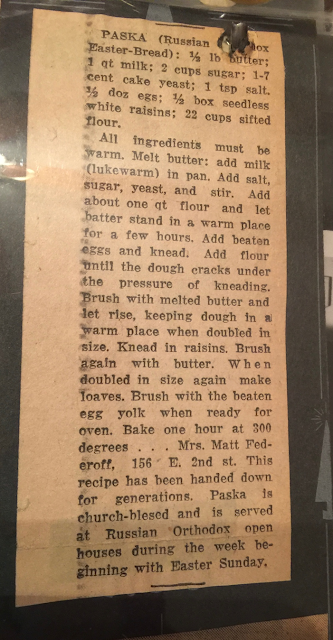
If I may quote Alice McDermott on my book “Oh, and the food. Gorgeous!” There’s blintzes, skansa (like a cheese Danish), kielbasa sausage, loaves and loaves of bread—from sweet paska to coffee-infused black bread—kapusta (cabbage) soup, and everything pickled, especially cucumbers and beets. Paska is like a sweet challah, which they top with a braid of dough to represent the Trinity. Here’s my grandmother’s recipe for paska, published in the Erie, Pennsylvania, paper in the 1950s!


*****


Read more about this book: https://www.americanending.net


Order this book for your own TBR stack: https://www.politics-prose.com/book/9781949467994


Read an excerpt from this book, “Russian Ending or American Ending?”:

http://www.graceandgravitydc.com/from-the-attic/russian-ending-or-american-ending-by-mary-kay-zuravleff#:~:text=In%20Zuravleff%E2%80%99s%20Russian%20Ending%20or%20American%20Ending%3F%2C%20the,is%20at%20their%20apartment%20watching%20their%20two%20children.


Work-in-Progress

DC-area author Leslie Pietrzyk explores the creative process and all things literary.